

hyperlipoproteinemia
- noun
- /ˌhaɪpərˌlɪpəˌproʊtiˈniːmiə/
- Specialized
- A diet low in saturated fats can be beneficial for managing hyperlipoproteinemia and improving heart health.
- Type hyperlipoproteinemia
Examples
-
In a series of 4,251 new patients seen during an eight-year period, 120 patients (5.1%) were found to have hyperlipoproteinemia.
Academic text (1995) -
Biochemical research revealed changes in the cholesterol fractions typical for type 11A hyperlipoproteinemia.
Academic text (1996) -
Type 11A hyperlipoproteinemia was evident.
Academic text (1996) -
This type of hyperlipoproteinemia is often accompanied by atherosclerotic vascular diseases and CD.
Academic text (1996) -
Changes of cholesterol fractions are typical for Type 11A hyperlipoproteinemia, which often causes atherosclerosis of vessels and CD.
Academic text (1996) -
Patients diagnosed with hyperlipoproteinemia often require regular monitoring of their cholesterol levels.
-
Medications can help lower the high cholesterol associated with hyperlipoproteinemia in affected individuals.
Synonyms

 1
7.1
1
7.1

A condition with too much fat in the blood


 1
9.5
1
9.5
A condition with abnormal amounts of fat in the blood, like cholesterol
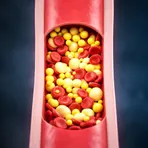
A condition with too much fat in the blood

A condition with too much fat in the blood that raises the chance of heart disease

A high level of fat in the blood

A condition with too much fat in the blood

A condition with a lot of fat in the blood

A condition with too much fat in the blood

Too much fat in the blood that can damage the heart and blood vessels

Too much fat in the blood that can cause heart problems
Antonyms

- Specialized
Very low levels of fat in the blood and the proteins that carry it
How Much
- Specialized

- Specialized
Surface Forms
Morphology
hyperlipoproteinemia = lipoproteinemia (semi-transparent) = hyper + lipo + protein + emia
The added hyper- prefix straightforwardly indicates an excess amount of the base medical condition.
Etymology
Hyperlipoproteinemia is built from Greek parts: hyper- 'too much', lipo- 'fat', protein, and -emia 'blood condition', like in anemia. So it means a 'blood condition' with too many fat-carrying proteins, which is why it is used for very high cholesterol and other fat levels in the blood.