
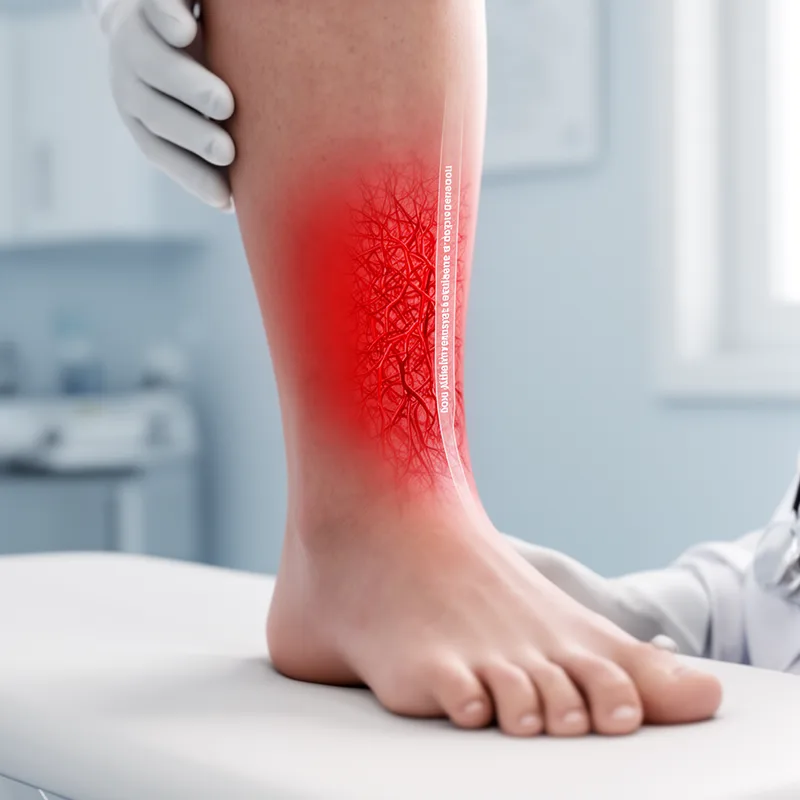
hyperemia


 1
9.9
1
9.9
- noun
- /ˌhaɪpəˈriːmiə/
- Specialized
- The doctor explained that hyperemia in the tissues can lead to swelling and redness.
- reactive hyperemia
- phenomenon of hyperemia
- hyperemia of the skin
Examples
-
The reactive hyperemia peak (similar to 3.3 times control) at 36 Celsius was greater (<0.05) than that at 28 Celsius (similar to 3.2 times control).
Academic text (1999) -
The principal cause of the transient temperature rise occurring after pressure application is believed to be a result of the phenomenon called reactive hyperemia.
Academic text (1991) -
Arterial arrest is followed by reactive hyperemia and increased blood flow for days.
Academic text (2000) -
After the release of surface pressure, the reactive hyperemia peak of perfusion increased with heating.
Academic text (1999) -
Its margins were unidentifiable because of intense mucopurulent discharge and hyperemia.
Academic text (2008) -
Heating the skin induces hyperemia and largely eliminates the sympathetic reactivity of the cutaneous vasculature (8).
Academic text (1990) -
After sitting for a long time, she noticed hyperemia in her legs due to the increased blood flow.
-
During exercise, the athlete experienced hyperemia in his muscles, resulting in a noticeable increase in temperature.
Antonyms

How Congested

Surface Forms
Morphology
hyperemia = hyper + emia
This is a learned medical formation built from the prefix hyper- and the bound form -emia, so most B1 learners cannot reliably infer the meaning from the parts.
Etymology
The word hyperemia comes from two Greek parts: hyper- meaning 'over', as in hyperactive, and -emia meaning 'blood', as in anemia. So, hyperemia is when there is 'too much' blood in a part of the body, which often makes the area red.