
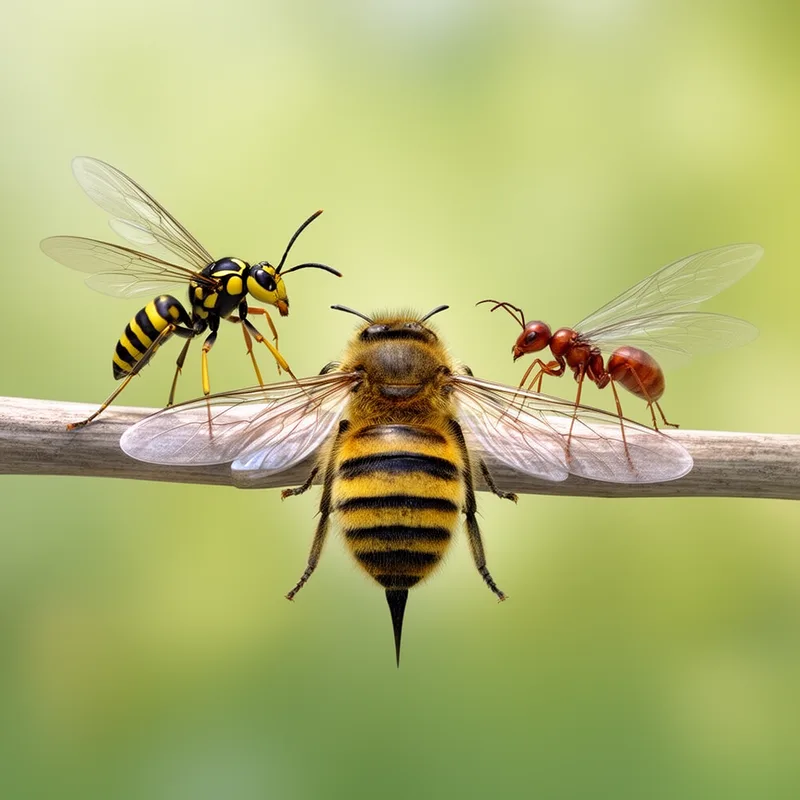
hymenopteran


 1
9.9
1
9.9
- noun
- /ˌhaɪməˈnɒptərən/
- Specialized
- Four Hymenopteran families (Argidae, Cimbicidae, Cynipidae, and Eulophidae) were represented by a single species.
- hymenopteran stings
Examples
-
Bee, wasp, and ant (hymenopteran) stings may cause allergic reactions for a third of those stung; a third of whom will have a prior allergy history.
Academic text (2012) -
The hymenopteran's size, markings, and behavior easily identified it as a cicada killer.
Academic text (2002) -
ACE inhibitor drugs have already been mentioned as being implicated in hymenopteran stings.
Academic text (2012) -
Several years ago we combined data we had gathered independently over our careers and demonstrated that, compared with iguanians, scleroglossans eat many fewer ants, other hymenopterans, and beetles, most of which produce noxious or toxic chemicals.
Academic text (2006) -
International travelers who intend to spend considerable time outdoors in temperate climates from spring to autumn, or in tropical climates all year round, are at significantly increased risk of hymenopteran stings and subsequent allergic reactions.
Academic text (2012) -
Many people are allergic to hymenopteran stings from bees and wasps.
-
Insects like bees, wasps, and ants are classified as hymenopteran species.
-
A hymenopteran is an insect known for having two pairs of wings.
Synonyms

An insect like a bee, ant, or wasp that often has two pairs of thin wings
An insect like a bee, wasp, or ant with two pairs of thin wings, often with a sting
Surface Forms
Morphology
hymenopteran = Hymenoptera (opaque) = hymen + ptera + an
Formed from Greek scientific combining forms (Hymenoptera + -an); the technical base and combining elements are not likely to be transparent to an average B1 learner.
Etymology
Hymenopteran comes from Greek parts hymen- meaning 'membrane' and -ptera meaning 'wing', the same root you see in helicopter. So a hymenopteran is an insect with thin, clear wings such as bees, wasps and ants.