

hymenopterous insect
- noun
- /ˌhaɪməˈnɒptərəs ˈɪnsekt/
- Specialized
- The honeybee is a well-known hymenopterous insect vital for pollination.
Examples
-
A hymenopterous insect like a bee plays a crucial role in pollination.
-
Some species of hymenopterous insect have developed complex social structures, like ants and wasps.
-
A scientist may collect various hymenopterous insects for research on insect behavior.
-
Many hymenopterous insects are essential for our ecosystems.
-
A scientist may collect various hymenopterous insects for research on insect behavior.
-
The honeybee is a well-known hymenopterous insect vital for pollination.
-
Many hymenopterous insects are essential for our ecosystems.
Synonyms
 341
1.0
341
1.0

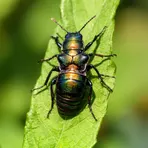
A small animal with a body in three parts, six legs and often wings

 1
9.9
1
9.9
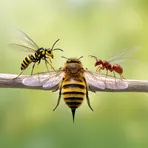
An insect like a bee, wasp, or ant with two pairs of thin wings and sometimes a stinger

An insect like a bee, ant, or wasp that often has two pairs of thin wings
Surface Forms
Morphology
This noun phrase is a straightforward adjective + noun composition: if a learner knows 'hymenopterous' (of the order Hymenoptera) and 'insect', the meaning 'an insect of the Hymenoptera (e.g., bees, wasps, ants)' is directly derivable. Although 'hymenopterous' is technical vocabulary, the semantic relationship is literal and predictable from the constituents.
Etymology
Hymenopterous insect: The name hymenopterous insect comes from old Greek parts hymen meaning 'membrane' and pterous meaning 'wing', which gives the picture of thin, clear wings. So it refers to insects like bees, wasps, and ants that have those thin wings and often can sting.