
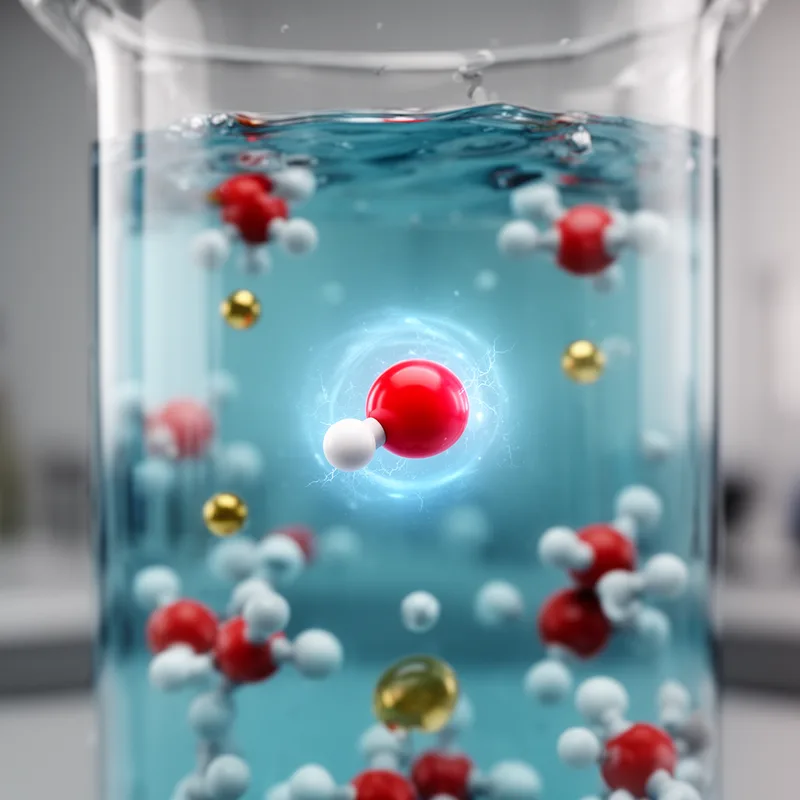
hydroxide ion
- noun
- /haɪˈdrɒksaɪd aɪən/
- Specialized
- The hydroxide ion can react with acids to form water and salts.
Examples
-
Lot of the molecules of water are actually split into a hydroxide ion and a hydrogen ion.
-
But as you raise the pH, IE add more hydroxide ion, the diffusion coefficient starts to go up.
-
Basin water problem, it's a concentration of hydroxide ion POHPH.
-
You don't have much ionization to form the hydroxide ion concentration.
-
In an alkaline solution, the presence of a hydroxide ion increases the pH level.
-
Chemists often measure the concentration of hydroxide ion in various chemical reactions.
Synonyms
 8
5.8
8
5.8

A chemical made of oxygen and hydrogen that reacts with acids to make water and salt
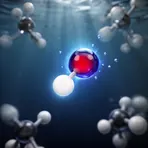
A particle with a negative charge made of one oxygen and one hydrogen atom
How Acidic
- Specialized

- Specialized
- Specialized
- Specialized
Surface Forms
Morphology
The term is directly compositional: 'hydroxide' names the hydroxyl-based species and 'ion' denotes a charged particle, so together they denote a charged hydroxide species (OH−). Although technical, the meaning follows straightforwardly from the constituents and is cross-linguistically and morphologically regular, so a learner who knows both words can derive the MWE's meaning.
Etymology
Hydroxide ion: The name hydroxide ion was formed from parts that tell what it is: hydro for hydrogen, oxide for oxygen, and the ending -ide that marks a 'negative' part. So the name literally says 'a negative part of hydrogen and oxygen', which explains why it means one oxygen and one hydrogen carrying a negative charge.