
hydrochlorofluorocarbon
- noun
- /ˌhaɪdrəˌklɔːrəˈflʊərəˌkɑːrbən/
- Specialized
- The National Institute of Standards and Technology (NIST) is examining two refrigerant mixtures that appear promising as replacements for R22, a hydrochlorofluorocarbon refrigerant widely used in residential heat pumps.
Examples
-
Scientists are studying the effects of hydrochlorofluorocarbons on the ozone layer and climate change.
-
Many appliances now use hydrochlorofluorocarbon instead of traditional refrigerants to reduce ozone depletion.
-
The company is switching to a more environmentally friendly hydrochlorofluorocarbon for its cooling systems.
Synonyms

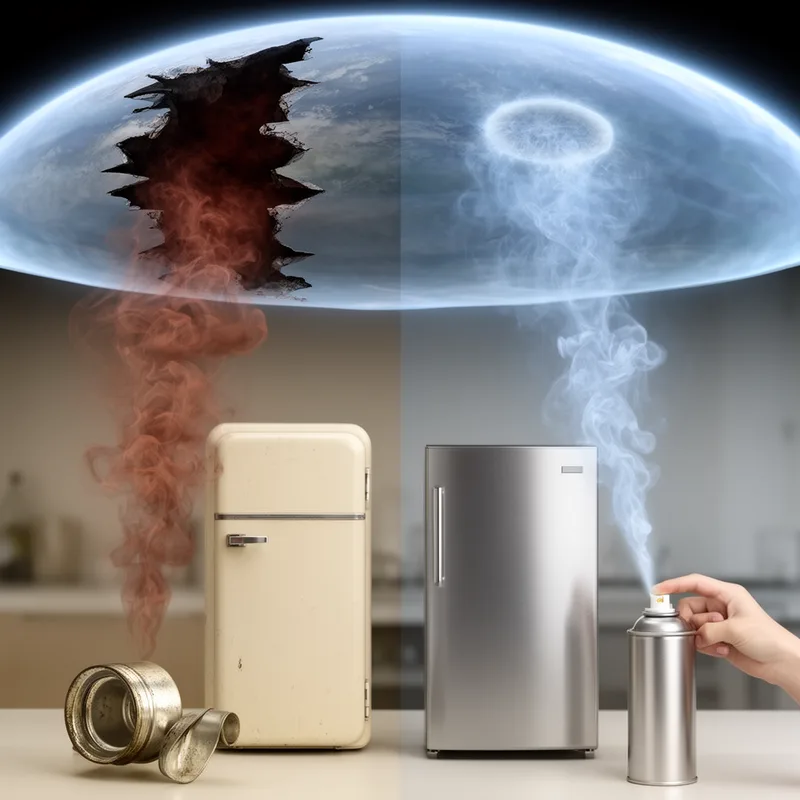
A chemical used in fridges and spray cans that damages the ozone layer less than older chemicals
Surface Forms
Morphology
hydrochlorofluorocarbon = chlorofluorocarbon (opaque) = hydro + chloro + fluoro + carbon
The word is built systematically from classical combining forms, but the chemical meaning is highly specialized and not readily inferable for an average B1 learner.
Etymology
Hydrochlorofluorocarbon breaks into hydro ('hydrogen'), chloro ('chlorine'), fluoro ('fluorine') and carbon ('carbon'), meaning it is a chemical made of those elements. So the name tells you what is inside the compound and why it is used to cool things as a less harmful choice than older chemicals that damaged the ozone layer.

