

hostile witness
 7
7.3
7
7.3

- noun
- /ˈhɑːstaɪl ˈwɪtnəs/
- Jargon
- During the criminal trial, prosecutors declared Kaelin a hostile witness, as he provided rambling, unclear answers.
- declare a hostile witness
- treat as a hostile witness
- call a hostile witness
Examples
-
They're going to make you a hostile witness.
-
May I treat the witness as a hostile witness?
-
The judge refused at first, but later ruled that Smith could be treated as a hostile witness.
Blog text (20) -
You're apparently going to be a very hostile witness in this case.
-
He would be considered a hostile witness in a court of law.
Blog text (13) -
Again, with so many hostile witnesses and conflicting accounts of the crime, it is hard to be sure exactly what happened.
Blog text (4) -
Your Honor, given the witness's reluctance to testify, can I have the court's permission to treat her as a hostile witness?
-
During the trial, the defense attorney treated the witness as a hostile witness due to his unexpected answers.
-
The lawyer asked the judge to allow her to question her former partner as a hostile witness because of his contradictory statements.
-
In court, the judge confirmed that they could treat the reluctant participant as a hostile witness after he refused to cooperate.
Synonyms

 1
8.7
1
8.7
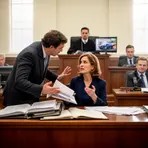
A witness called by a party whose evidence is likely harmful and may be questioned more freely
How Cooperative

Surface Forms
Morphology
The basic idea of 'a witness who is hostile or adverse' follows directly from combining 'hostile' (antagonistic) and 'witness', so a B1 learner who knows both words would likely infer that the witness is unfriendly or opposed. However, the specialised legal implication (that the witness may be treated as adverse and questioned as in cross‑examination) is procedural and not fully predictable from the constituents, so the expression is only partially transparent.
Etymology
The phrase hostile witness comes from a courtroom picture: a hostile 'unfriendly' witness is someone who turns against the lawyer who called them and acts like an opponent. So the lawyer may question them as if they were on the other side, and today the term means a witness treated as 'against the party that called them'.