
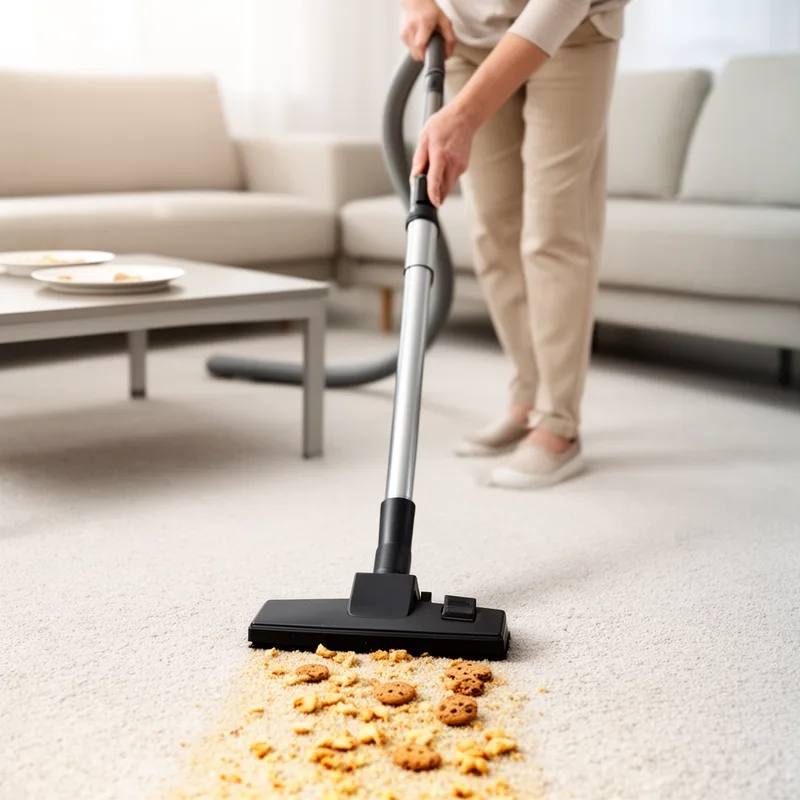
to hoover up


 1
4.3
1
4.3
- phrasal verb
- /ˈhuːvər ʌp/
- UK
- After dinner, we quickly hoovered up the crumbs left on the floor.
Examples
-
So we are going to basically clean up, Hoover up all the dust, wipe all the surfaces, and then we're going to sugar soap clean the whole room.
-
Can you please Hoover up?
-
For each new concept, he hoovered up raw material.
Blog text (22) -
Hoovered up half of it in one go.
Blog text (1) -
It's then time for one last Hoover up, get some carpet down and feel the luxury of the finished tunnel.
-
And then you can Hoover it up, Hoover up the excess contents, and then you can go ahead and flip your mattress.
-
If Wall Street is not adding any value but is instead merely hoovering up huge amounts of commonly held resources in a vast redistribution of wealth, perhaps we're better off without them.
Blog text (14) -
I need to hoover up the dust before guests arrive.
-
She spent the afternoon hoovering up all the dirt in the living room.
Synonyms
 ∞
1.0
∞
1.0
To remove dirt and stains
 433
1.0
433
1.0
To make a room or area free of dirt and tidy by removing mess
 48
1.7
48
1.7
Clean a floor or carpet with a machine that sucks up dirt
 3
4.2
3
4.2
To clean a floor or carpet with a vacuum cleaner

To clean a carpet or floor with a vacuum cleaner
Antonyms

How Clean

Surface Forms
Morphology
The verb 'hoover' already means to clean with a vacuum and the particle 'up' adds a completion/thoroughness sense; together the meaning 'vacuum/clean thoroughly' is directly derivable from the parts. This verb+particle composition follows common English phrasal patterns and is therefore immediately comprehensible to a B1 learner who knows both constituents (noting 'hoover' is a common UK verb derived from a brand).
Etymology
The phrasal verb hoover up comes from the name of the Hoover vacuum cleaner. Picture the machine sucking dust and crumbs up into its bag, and you get why it means 'to clean' or 'remove dirt', often quickly and thoroughly.