
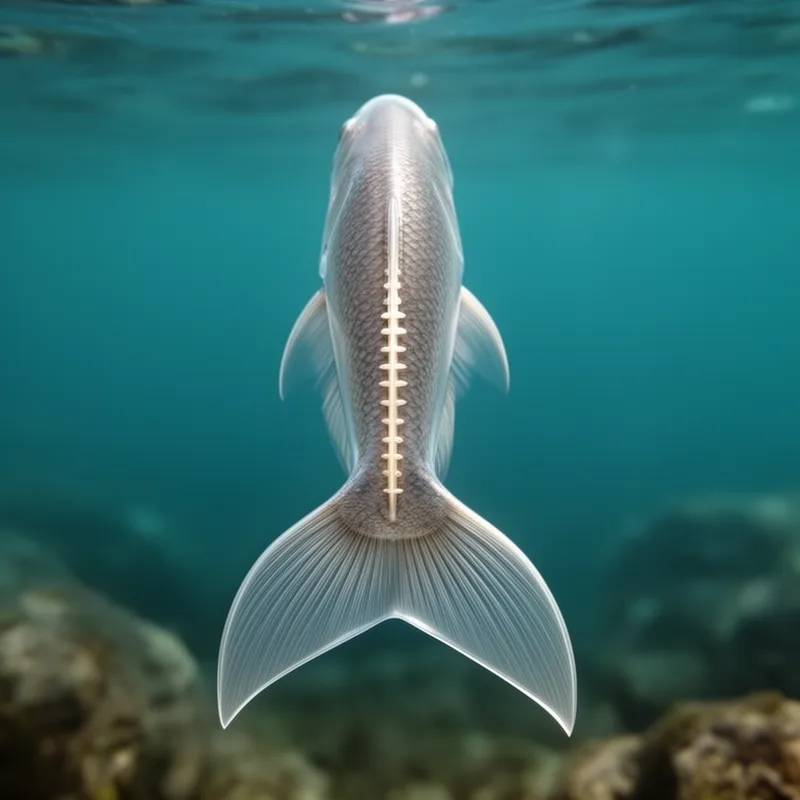
homocercal
- adjective
- /ˌhoʊmoʊˈsɜrkəl/
- Specialized
 :
homoceral
:
homoceral
- The trout has a homocercal tail that helps it swim efficiently.
Examples
-
Most modern bony fish have a homocercal tail, which aids in efficient swimming.
-
The homocercal tail distinguishes these fish from older lineages with asymmetrical tails.
-
Scientists noted the homocercal shape in the fossilized specimen's caudal fin.
-
Many species of bony fish feature a homocercal tail.
-
Most modern bony fish have a homocercal tail, which aids in efficient swimming.
-
The homocercal tail distinguishes these fish from older lineages with asymmetrical tails.
-
Many species of bony fish feature a homocercal tail that enhances their swimming abilities.
Antonyms
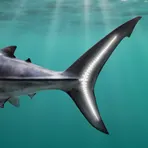
- Specialized
A fish tail with the top part larger than the bottom and the backbone reaching into the upper part
Compounds

- Specialized
A tail fin that is the same on both sides and extends past the spine, seen in most bony fish
How Symmetrical
- Specialized

- Specialized
Surface Forms
Morphology
homocercal = cercal (semi-transparent) = homo + cerc + al
The prefix 'homo-' clearly signals 'same', but the stem 'cercal' is a technical/rare biological term for 'tail', so the full meaning is only partially accessible to general learners.
Etymology
Homocercal combines homo- 'same' (as in homogeneous) and -cercal from a Greek word for 'tail'. So homocercal literally means 'same tail', which helps you remember it describes a fish tail whose top and bottom parts are the same shape.

