

homeless person
 76
2.3
76
2.3

- noun
- /ˈhoʊmləs ˈpɜrsən/
- You may see a homeless person sitting on the sidewalk asking for help.
- housing for homeless people
- help homeless people
- needs of homeless people
Loading YouTube…
Watch on YouTubeYou may see a homeless person in the street.
- You may see a homeless person in the street.
- It's the way people respond to homeless people in India.
- At that time I wanted to make this film with homeless people for two reasons.
- And in my neighborhood we see homeless people all the time.
- There are more empty houses in LA than there are homeless people.
- Feed a homeless person, be part of a nonprofit and serve over the weekend.
- He said flat out, Starbucks functions as an important buffer for homeless people.
- Like, I think people have been fed a lot of gross narratives about homeless people.
- Let's consider the fact that you have a man, two men, and they both give a homeless person a dollar, all right?
- OK, so San Francisco had this program to increase services for homeless people and people suffering from drug addiction.
- She's like an homeless person and it just, it didn't really.
Examples
-
Every week, volunteers gather to provide meals for homeless people living in the city.
-
It's the way people respond to homeless people in India.
-
You may see a homeless person in the street.
-
I spent the majority today just speaking to homeless people and understand some of them.
-
There are thousands of homeless people all over the world.
-
And in my neighborhood we see homeless people all the time.
-
You know, there were a lot of homeless people in our town, too many homeless people.
-
Since the early 1980s, the number of homeless people has grown rapidly.
Academic text (1994) -
50,000 homeless people line the streets of L.A.
-
The role of primary care for homeless persons has been described and discussed extensively in the literature.
Academic text (2010)
Synonyms
 73
1.6
73
1.6
A person who has no home to live in
 46
5.9
46
5.9
A person who moves from place to place and has no permanent home or steady job
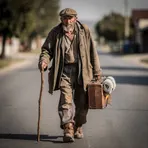 28
6.1
28
6.1
A person who has no home and travels, often begging or doing casual work
 25
7.7
25
7.7
A person who has no home and moves from place to place, often begging
 23
3.9
23
3.9
A person who travels without a fixed home or purpose
 15
7.6
15
7.6
A person who moves from place to place without a home or job
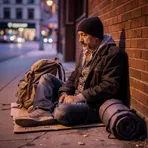 11
5.6
11
5.6
A person without a home who sleeps outdoors or in public places
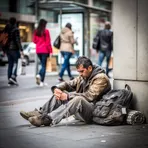 3
8.4
3
8.4
A person who has no home or job and is ignored by other people
 1
7.7
1
7.7
A person with no money, job, or home

People who do not have a permanent home
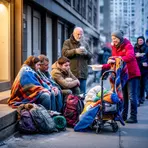
People who do not have a home to live in

A person who sleeps outside because they have no home

People who lose their home, land, or property because others force them out
Antonyms


How Homeless

Surface Forms
Morphology
The meaning 'a person without a home' is directly and transparently derived from combining 'homeless' (lacking permanent shelter) with 'person' (a human individual); knowing both constituents allows a learner to infer the phrase. This is a regular adjectival + noun composition common across languages, so an average B1 learner who knows the words will understand the MWE.
Etymology
Homeless person comes from putting home and less together. Here home means the place you live and less means 'without', so the phrase gives a simple image of someone 'without' a home and that's why it means a person who has no permanent place to live.