

vagrant
 25
7.7
25
7.7

- noun
- /ˈveɪɡrənt/
- The local shelter is open every night to provide food and warmth for vagrants in need.
- homeless vagrant
Loading YouTube…
Watch on YouTubeIt Shields them from the vagrants of market forces.
- It Shields them from the vagrants of market forces.
- The so-called vagrants, vagabonds, runaways, outlaws from Q Anon, adherence to fish heads to O block residents and much more.
Examples
-
I asked Gary if most of Bibb County's 300+ vagrants were mentally ill.
Blog text (1) -
Public parks and open spaces now offer economic opportunities and repose to the majority, but also attract vagrants and criminals.
Academic text (2008) -
By late May, the vagrant had not been charged in connection with Stephanie's death.
Academic text (1999) -
And New Orleans has enough vagrants already, I suggest you move along...
-
As I went in, I saw myself in a mirror, looking dirty and disreputable, a pale vagrant with red eyes.
Fiction book (1999) -
A group of vagrants clusters around a campfire on the top floor of one of the towers.
Fiction book (1996) -
There he was taken by the constables as a vagrant and sent home to Stowe Bardolf.
-
Several vagrants and squatters crowd into the room, lured by the commotion.
Fiction book (1990) -
The city has many programs to help vagrants find shelter and job opportunities.
-
As we walked through the park, we saw a vagrant sitting on a bench with his belongings.
Synonyms
 77
1.0
77
1.0
A person who asks others for money or food
 76
2.3
76
2.3
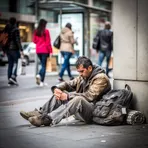
A person who has no home and often lives on the streets
 73
1.6
73
1.6
A person who has no home to live in
 46
5.9
46
5.9
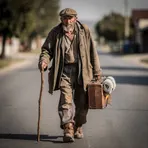
A person who moves from place to place and has no permanent home or steady job
 28
6.1
28
6.1
A person who has no home and travels, often begging or doing casual work
 23
3.9
23
3.9
A person who travels without a fixed home or purpose
 15
7.6
15
7.6
A person who moves from place to place without a home or job
 11
5.6
11
5.6
A person without a home who sleeps outdoors or in public places
 6
7.0
6
7.0
A person who moves from place to place and has no fixed home
 3
8.4
3
8.4
A person who has no home or job and is ignored by other people


 1
8.3
1
8.3
A person who moves from place to place without a home

A homeless person who lives on the street, often in Paris

A person who travels without a home and lives by odd jobs

A man who asks people for money or food on the street

A person who sleeps outside because they have no home
Antonyms


How Settled

Surface Forms
Morphology
vagrant = vag + ant
Although built from a root meaning 'wander' plus the suffix '-ant', the root 'vag' is not a standalone English word and the formation is not transparently analyzable by an average B1 learner.
Etymology
Vagrant comes from an old Latin verb vagari, which means 'to wander'. It originally named a person who wanders without a home, the same idea you find in the English word vagabond, so a vagrant today is someone who moves from place to place with no fixed house or work.