
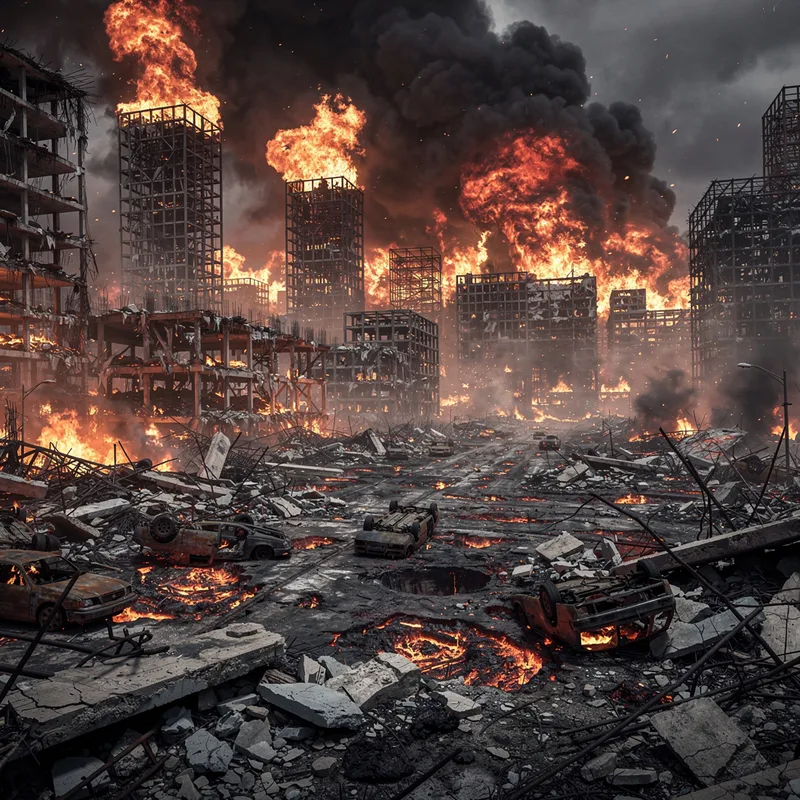
holocaust
 31
9.6
31
9.6

- noun
- /ˈhoʊləˌkɔst/
- NSFW
- Many historians study the holocaust not just as a historical event, but to understand the complexities of human behavior in times of war.
- nuclear holocaust
- threat of holocaust
- biological holocaust
Loading YouTube…
Watch on YouTubeSo first of all, when we're comparing the two holocausts, we're not comparing the moral value of the victims.
- So first of all, when we're comparing the two holocausts, we're not comparing the moral value of the victims.
- She says the British were given the mandate to establish a Jewish Home in Palestine in order to assist refugees from the Holocaust.
- So the the categories were the Holocaust, the Kennedys, cancer.
- It was just called being sad all the time because #Holocaust, you know?
- And he's going to to a old circular ruin of a temple devoured by an ancient Holocaust.
Examples
-
We have interviewed holocaust survivors.
-
Escapees had a chance to reproduce after their escape; survivors had to wait until the Holocaust was over.
Academic text (1996) -
Most of those who remained in Eastern Europe were killed in the Holocaust during World War II.
Academic text (1993) -
Children of Holocaust survivors will have less stress resilience than children of Holocaust escapees.
Academic text (1996) -
A lead-plated, 39-foot column in Hamburg was constructed as a monument to the Holocaust.
Academic text (1996) -
The devastating holocaust during World War II resulted in the deaths of millions and left deep scars across Europe.
-
The documentary highlighted the holocaust and its lasting impact on families and communities around the world.
Synonyms
 915
3.0
915
3.0
A very sad event that causes much suffering and loss
 198
7.0
198
7.0
The violent killing of many people in a cruel way
 176
7.0
176
7.0
A sudden terrible event that causes great damage and suffering
 110
4.3
110
4.3
Great damage to a wide area often caused by war or a big disaster
 90
4.8
90
4.8
Great destruction that leaves places badly damaged, for example after a war or storm
 19
9.2
19
9.2
A sudden violent event that causes great destruction or change
How Destructive
- NSFW
47
8.1

- NSFW
31
9.6
90
4.8
849
3.0
885
1.4
Surface Forms
Etymology
Holocaust comes from the Greek parts holos meaning 'whole' and kaustos meaning 'burnt'; it originally meant a 'whole burnt offering' that was completely burned. So the word now suggests total destruction or a very large loss of life, especially by fire or war.