
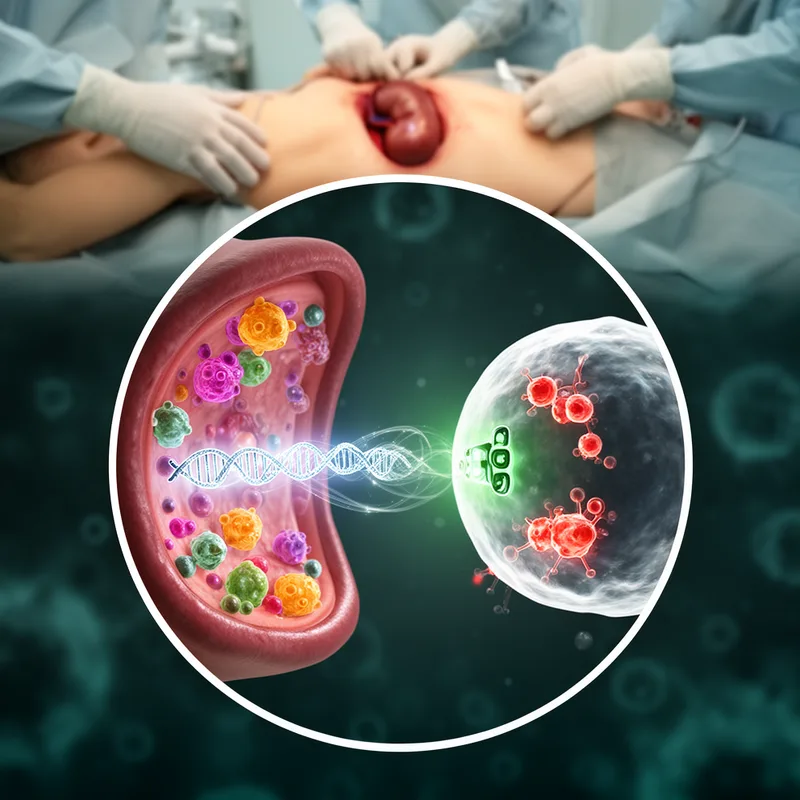
histocompatibility complex
- noun
- /ˌhɪstəʊkəmˌpætəˈbɪlɪti ˈkɒmplɛks/
- Specialized
- Researchers study the histocompatibility complex to understand how genes influence the body's ability to fight infections.
- the major histocompatibility complex
- MHC (major histocompatibility complex)
Examples
-
Major histocompatibility complex (MHC) class I antigens have a crucial role in the defense of an organism against intracellular pathogens and perhaps also against tumors.
Academic text (2018) -
The major histocompatibility complex determines whether an organ transplant will be accepted by the recipient's immune system.
-
If you look at perfume, if I were to ask each of you to smell four different perfumes and then have you tell me which of the four is most attractive to you, it turns out that what drives that preference is its congruity with something called the major histocompatibility complex.
Academic text (2013) -
"I specialize in the major histocompatibility complex (MHC) antigens," says Lunney.
Academic text (1995) -
First, DCs present T cells with their cognate peptide antigens in the context of the major histocompatibility complex (MHC).
Academic text (2016) -
In organ transplantation, matching the histocompatibility complex of the donor and recipient is critical for success.
Antonyms

- Specialized
A mismatch between donor and receiver tissues that causes transplant rejection
Surface Forms
Morphology
The phrase is partly compositional: a learner who knows 'histocompatibility' (the property allowing tissue transplantation) and 'complex' (a group of interrelated parts) can infer it refers to a group/assembly related to histocompatibility. However, the specific biological reference (a set of genes/proteins on chromosome 6 relevant to immune compatibility) is technical domain knowledge and not fully predictable from the parts for a B1 learner.
Etymology
Histocompatibility complex comes from parts meaning histo- 'tissue', compatibility 'a good match', and complex 'a group'. So, it paints a simple picture: a group of genes that help tissues 'match' each other, which is why the term refers to the genes that decide if a donated organ will be accepted or rejected.

