
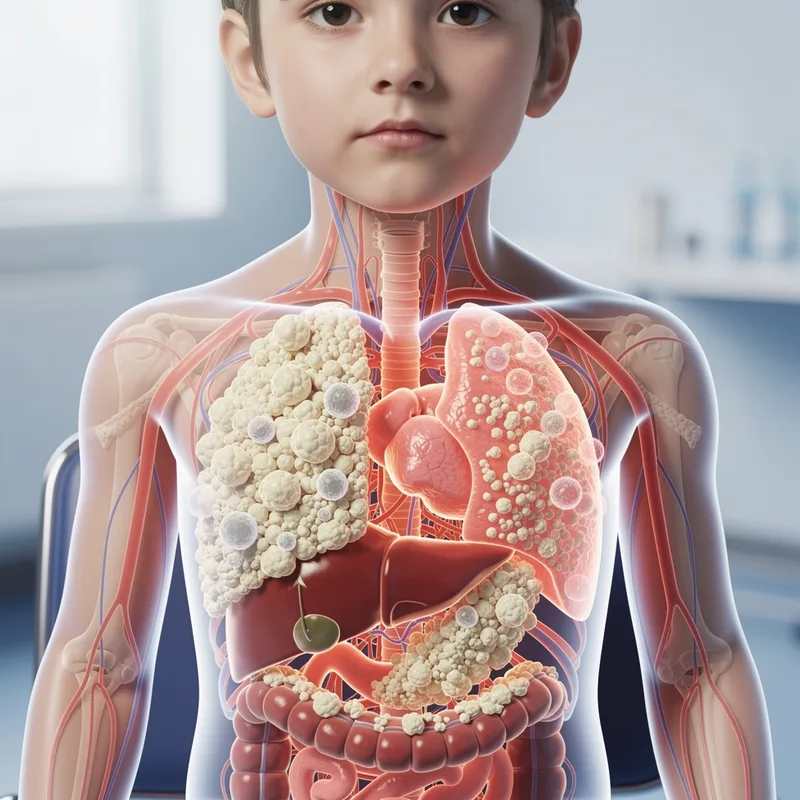
histiocytosis


 1
9.9
- noun
- /ˌhɪstioʊsaɪˈtoʊsɪs/
- Specialized
- The research focused on effective treatments for histiocytosis in pediatric patients who suffer from this blood disorder.
- cell histiocytosis
- histiocytosis with massive lymphadenopathy
- Sinus histiocytosis
Examples
-
Unifocal Langerhans' cell histiocytosis of the frontal bone is rare.
Academic text (2002) -
Langerhans' cell histiocytosis, also known as histiocytosis X, is primarily a pediatric disease.
Academic text (2002) -
Mother also later became ill with a very rare illness called Histiocytosis X.
Blog text (6) -
Langerhans' cell histiocytosis usually occurs during childhood.
Academic text (2002) -
The treatment of Langerhans' cell histiocytosis depends on its clinical subgroup.
Academic text (2002) -
Temporal bone involvement in histiocytosis X may masquerade as chronic otitis media.
Academic text (2005) -
The term sinus histiocytosis with massive lymphadenopathy (SHML) was introduced by Rosai and Dorfman in 1969.
Academic text (2004) -
Rosai-Dorfman disease (SHML) is a rare histiocytosis of unknown etiology that most commonly involves the cervical lymph nodes.
Academic text (1998) -
Rosai-Dorfman disease, or sinus histiocytosis with massive lymphadenopathy (SHML), is a rare histiocytosis of unknown etiology that most commonly involves the cervical lymph nodes.
Academic text (1998) -
Histiocytosis is a rare condition where the body produces too many histiocytosis macrophages, which can affect multiple organs.
Synonyms
 6
3.5
A health problem that affects the blood, like anemia or leukemia
 1
9.3
A higher than normal number of white blood cells in the blood
Surface Forms
Morphology
histiocytosis = histiocyte (transparent) = histiocyte + osis
Standard medical derivation: the disease/condition suffix '-osis' is added to 'histiocyte' to indicate a disorder involving those cells.
Etymology
Histiocytosis breaks into histo- meaning 'tissue' and -cytosis meaning 'a condition of cells', with cyte like the common word 'cell'. So it names a condition where certain tissue cells, a kind of white blood cell, are too many, which explains the modern medical meaning.