
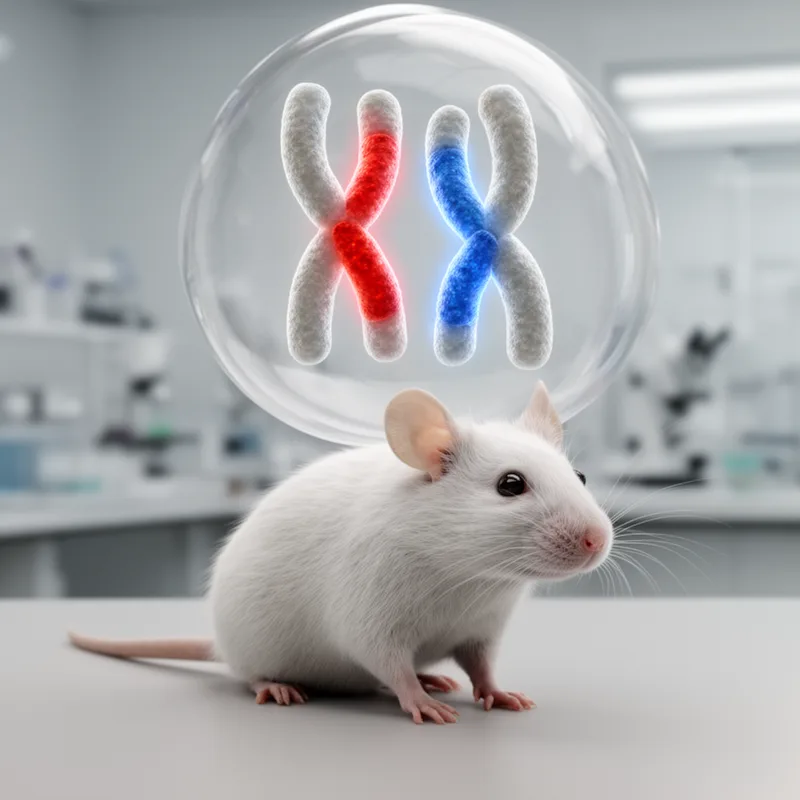
heterozygote


 1
9.9
- noun
- /ˌhɛtəroʊˈzaɪɡoʊt/
- Specialized
- Excesses in heterozygote frequencies are expected in outcrossing species, while excesses in homozygote frequencies are considered characteristic of inbreeding species.
- heterozygote codon 52
- heterozygote 52
Examples
-
To use his own words: "The corpuscles of the anaemic heterozygote are smaller than normal, and more resistant to hypotonic solutions."
Academic text (1996) -
A heterozygote inherits different alleles from each parent, resulting in a unique combination of traits.
-
What if the heterozygote shows that phenotype?
-
Now this is the normal heterozygote which is susceptible to malaria.
-
But both of these have a heterozygote advantage in being malarial resistant.
-
The S A heterozygotes have the highest fitness.
-
When F approaches -1, there is an excess of heterozygotes in the population, whereas when F nears +1, the population is deficient in heterozygotes.
Academic text (2002) -
In malarial environments, the antimalarial benefits to the more numerous heterozygotes offset the severe disadvantage to the far less numerous homozygotes.
Academic text (1993) -
Female heterozygotes have demonstrated milder radiologic abnormalities, most noticeably dilated internal auditory canals.
Academic text (2005) -
In genetics, a heterozygote can produce offspring with a variety of traits due to its diverse alleles.
How Heterozygous
- Specialized
1
9.9

- Specialized
1
9.1
Surface Forms
Morphology
Etymology
Heterozygote comes from the Greek parts hetero- meaning 'different' and zygote meaning 'joined' or 'paired', so it literally suggests a 'different pair'. So, a heterozygote is an organism that has two different versions of the same gene, one from each parent.