
heterospory
- noun
- /ˌhɛtərˈɒspəri/
- Specialized
- Ferns exhibit either heterospory or homospory depending on the species.
Examples
-
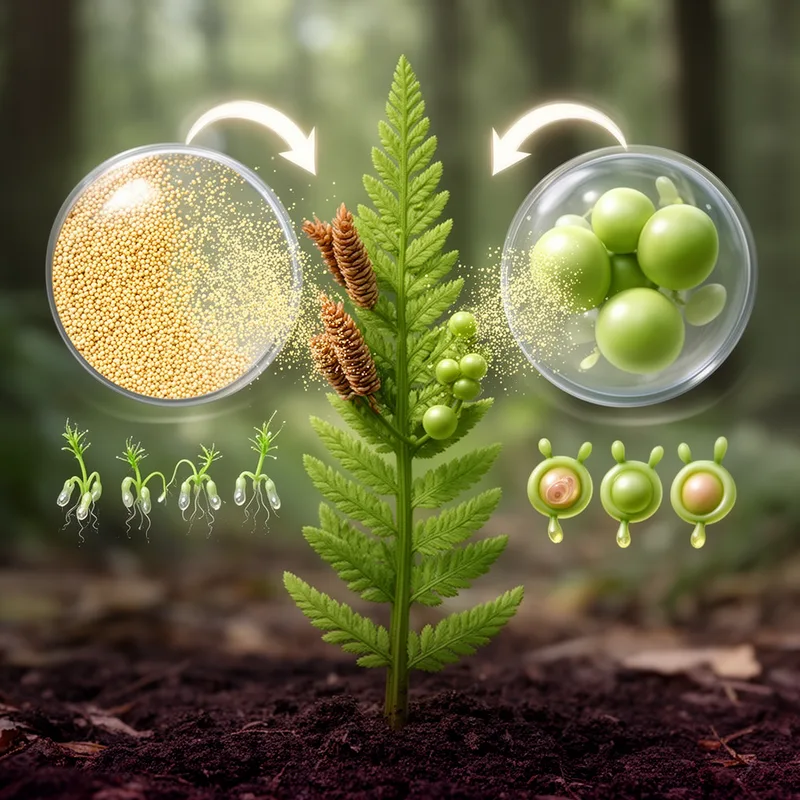
In plants that display heterospory, microspores develop into male gametophytes, while megaspores develop into female gametophytes.
-
The presence of heterospory allows for the separation of male and female reproductive roles in plants.
-
The evolution of heterospory marked a significant event in the diversification of land plants.
-
The concept of heterospory is crucial in plant biology.
-
Many seed plants exhibit heterospory in their reproductive cycles.
-
Ferns exhibit both microspores and megaspores, demonstrating heterospory in their reproductive structure.
-
The study of heterospory reveals how plants can produce distinct male and female gametophytes.
How Diverse
- Specialized

- Specialized
Surface Forms
Morphology
Etymology
The word heterospory comes from hetero- meaning 'different' and spore meaning 'a small reproductive cell', so it literally means 'different spores'. Plants with heterospory make two kinds of spores, one that becomes male and one that becomes female, which is why the word describes the separation of male and female roles in reproduction.

