
homospory
9.9
Production of only one type of spore in a plant or fungus
- noun
- /ˌhoʊməˈspɔri/
- Specialized
:
homosporia
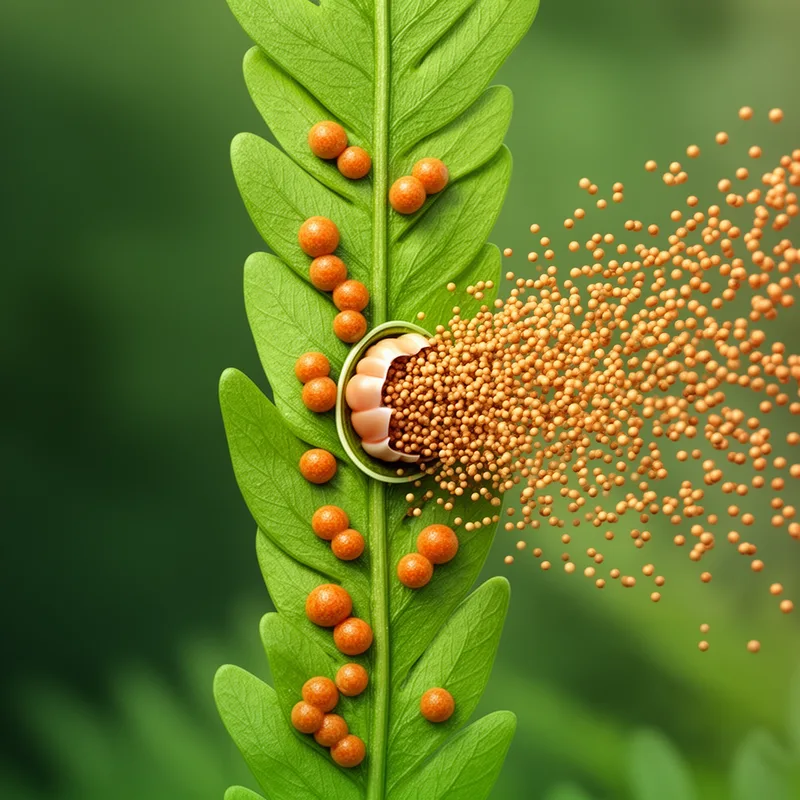
- In homospory, plants produce only one type of spore, which can develop into a gametophyte.
Examples
-
Many lower vascular plants, such as ferns, exhibit homospory rather than heterospory.
-
The study of homospory reveals how certain fungi rely on a single spore type for reproduction.
-
It seems clear, therefore, that the basic features of homospory enhance the possibility that each of the steps critical for the evolution of higher ploidy will occur.
Academic text (2002)
How Diverse
heterospory
- Specialized

homospory
- Specialized
Surface Forms
homospory singular
homospories plural
Morphology
homospory = homospore (transparent) = homo + spor + y
Formed from the combining form 'homo-' (same) + 'spor' with the nominalizing suffix '-y', directly expressing the condition of single-type spores.
Etymology
Homospory comes from the parts homo- meaning 'same', as in homogeneous, and spore meaning 'seed-like cell'. So homospory is when a plant or fungus makes only one kind of spore.

