

heterogenesis
- noun
- /ˌhɛtəroʊˈdʒɛnɪsɪs/
- Specialized
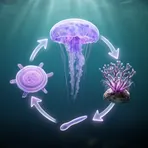
- Some parasites exhibit heterogenesis, alternating between sexual and asexual phases during their life cycles.
Examples
-
Many species exhibit heterogenesis as part of their reproductive strategy.
-
The study focused on organisms that use heterogenesis as a reproductive strategy.
-
Understanding heterogenesis is important in the context of evolutionary biology.
-
The study of heterogenesis is fascinating.
-
Some parasites exhibit heterogenesis, alternating between sexual and asexual phases to complete their life cycle.
-
The study focused on animals that show heterogenesis through different modes of reproduction.
-
Understanding heterogenesis helps clarify the reproductive strategies found in various plant species.
Synonyms


 1
9.9
1
9.9
A life cycle in which a plant or animal changes between different forms

A life cycle in plants and some algae with two different forms, one sexual and one asexual

An organism with one generation that reproduces by sex and the next generation that reproduces without sex
Surface Forms
Morphology
Etymology
Heterogenesis comes from the Greek parts hetero- meaning 'different' and -genesis meaning 'birth' or 'origin'. So heterogenesis is like 'different births', which helps you remember it describes a life cycle that changes between different forms or generations.