
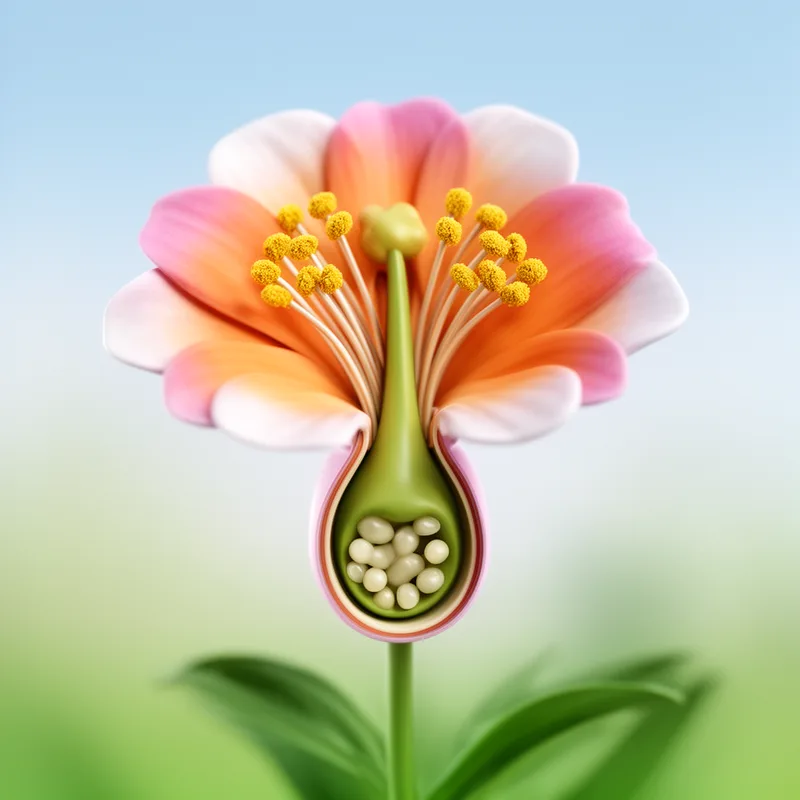
hermaphroditism


 1
9.9
1
9.9
- noun
- /hɜrˈmæfroʊdɪtɪzəm/
- Specialized
- The condition of hermaphroditism allows certain species to have both male and female reproductive organs.
Examples
-
I also agree with Cailliet (1991) and Gorbman (1983) that hermaphroditism is rare for Pacific hagfish.
Academic text (1993) -
It appears that hermaphroditism is even less frequent in black hagfish, as was reported by Cailliet (1991).
Academic text (1993) -
Some people have what used to be called "serial hermaphroditism."
Blog text (29) -
Hermaphroditism was found in 0.2% of the Pacific hagfish examined.
Academic text (1993) -
To make matters more exciting, habitat-specialist fishes have the capacity to change sex over their lifetime, a process otherwise known as sequential hermaphroditism.
Academic text (2013) -
Although Faro's role is to perfect the world, organize it, put it in equilibrium, and give it eternal life, he is closely associated with twinning, albinism, and hermaphroditism.
Academic text (2008) -
Money became a major target of the newly formed Intersex Society of North America (ISNA) because of his advocacy of neonatal treatment for some forms of hermaphroditism (Money, 1968).
Academic text (2003) -
However, deletions, often more severe than additions or sex-associated transgressions like ambiguous genitalia and hermaphroditism, may present significant psychological developmental concerns.
Academic text (2005) -
In diverse marine species, hermaphroditism enables individuals to adapt their sex depending on social and environmental cues.
-
Research into hermaphroditism offers valuable understanding of the variations in sexual characteristics across different animals.
Synonyms
A condition present from birth in which a person or animal has both male and female sex organs
Surface Forms
Morphology
hermaphroditism = hermaphrodite (transparent) = hermaphrodite + ism
Formed by adding the productive nominalizing suffix '-ism' to 'hermaphrodite' to denote the state or condition, which is a straightforward derivation.
Etymology
The word hermaphroditism comes from the Greek myth name Hermaphroditus, who was a mix of the gods Hermes and Aphrodite and became a being of both sexes. A helpful way to remember it is to think 'Hermes + Aphrodite' = both sexes, which explains the modern meaning 'having both male and female sex organs'.