
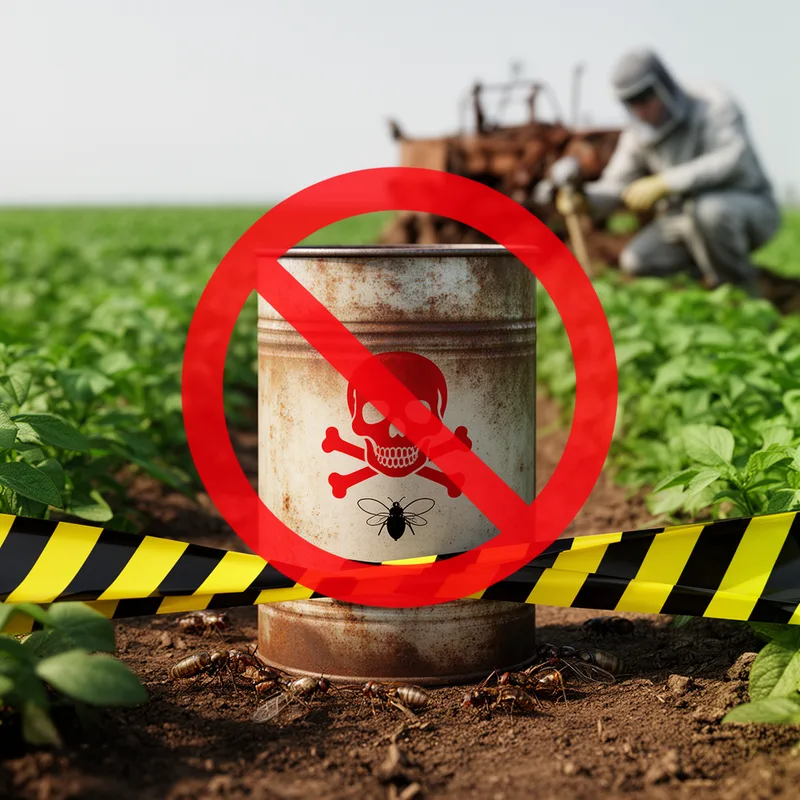
heptachlor
- noun
- /ˈhɛp.təˌklɔr/
- Specialized
- Heptachlor was moderately widespread and present at higher levels than its breakdown product, indicating more recent, possibly area-related exposure.
- heptachlor epoxide
- breakdown product of heptachlor
- levels of heptachlor
Examples
-
Heptachlor was more than 10 times more abundant than its breakdown product, heptachlor-epoxide.
Academic text (1993) -
Since females had significantly higher levels of heptachlor than men, this would indicate a domestic source, such as termite control.
Academic text (1993) -
Similarly, low levels of heptachlor found in the Juarez tissue study may reflect exposure from sources in El Paso.
Academic text (1993) -
The moderately widespread occurrence of heptachlor in both blood and tissue may imply an area-related exposure.
Academic text (1993) -
The occurrence for the heptachlor-type compounds taken together was 44 percent, indicating moderately widespread exposure.
Academic text (1993) -
DDT-type compounds were still the most abundant organochlorines in El Paso, followed by lower levels of lindane and heptachlor.
Academic text (1993) -
The chemical heptachlor was banned because it posed significant health risks to humans.
-
Due to its toxicity, heptachlor was used as an insecticide but is now prohibited in many countries.
-
Scientists discovered that exposure to heptachlor can lead to serious health complications.
Synonyms

 22
6.4
22
6.4

A poisonous chemical used to kill insects that is now banned in many countries
 3
9.9
3
9.9
A toxic chemical that kills insects and is now banned in many countries
 1
9.9
1
9.9
A harmful chemical once used to kill insects that stays in soil for years and is now banned


 1
9.9
1
9.9
A harmful poison used on crops to kill insects and now banned in many places
A poisonous chemical once used on crops to kill insects and now banned in many countries

A man-made chemical often called DDT that kills insects, harms people and animals, and many countries now ban it
Surface Forms
Morphology
heptachlor = hepta + chlor
Formed from specialist Greek combining forms ('hepta-' = seven, '-chlor' = chlorine) used in chemical nomenclature, which an average B1 learner cannot reliably interpret to infer meaning.
Etymology
Heptachlor comes from Greek parts hepta- meaning 'seven' and -chlor from chloros meaning 'green' or the element 'chlorine'. It was named because the chemical has seven chlorine atoms, so the name helps you remember that heptachlor is a chlorinated insecticide that is now known to be toxic.