
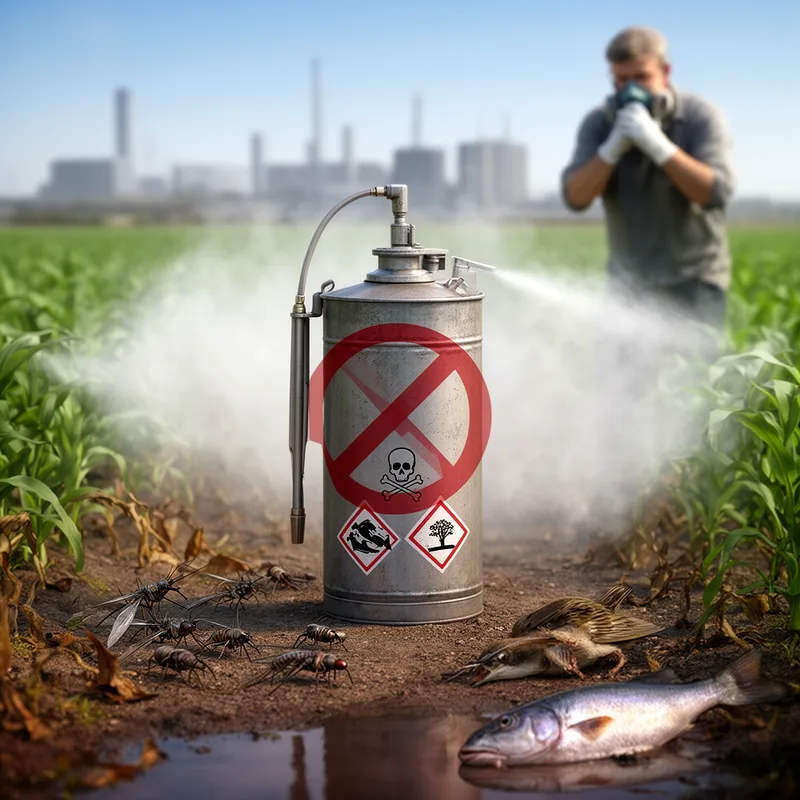
dichlorodiphenyltrichloroethane
- noun
- /daɪˌklɔːroʊˌdaɪˈfɛnɪlˌtraɪˌklɔːroʊˈɛθeɪn/
- Specialized
- The widespread use of dichlorodiphenyltrichloroethane led to serious environmental damage in the mid-20th century.
Examples
-
Many countries have banned dichlorodiphenyltrichloroethane due to its persistence in the environment.
-
Farmers used to rely on dichlorodiphenyltrichloroethane for pest control.
-
Exposure to dichlorodiphenyltrichloroethane has been linked to negative health effects in humans and wildlife.
-
The use of dichlorodiphenyltrichloroethane has been banned in many countries.
-
Exposure to dichlorodiphenyltrichloroethane has been linked to negative health effects in humans and wildlife.
-
Many countries have banned dichlorodiphenyltrichloroethane due to its persistence in the environment.
-
The widespread use of dichlorodiphenyltrichloroethane led to serious environmental damage in the mid-20th century.
Synonyms
 3
9.9
3
9.9

A toxic chemical that kills insects and is now banned in many countries
 1
9.9
1
9.9
A harmful chemical once used to kill insects that stays in soil for years and is now banned

A poisonous chemical once used to kill insects that is now banned
A man-made chemical that kills insects and stays in the environment
Surface Forms
Morphology
dichlorodiphenyltrichloroethane = phenyl + ethane (opaque) = dichloro + diphenyl + trichloro + ethane
The term is a technical chemical name composed of combining forms (dichloro-, diphenyl-, trichloro-, -ethane) whose meanings are specific to chemistry and not recoverable by average B1 learners from the components.
Etymology
Dichlorodiphenyltrichloroethane is a very long chemical name made of smaller parts: di- 'two', chloro 'chlorine', diphenyl 'two ring groups', tri- 'three', chloro 'chlorine', and ethane 'a two carbon chain'. So, the name simply describes the parts of the molecule and is the formal chemical name for the insecticide commonly called DDT.