
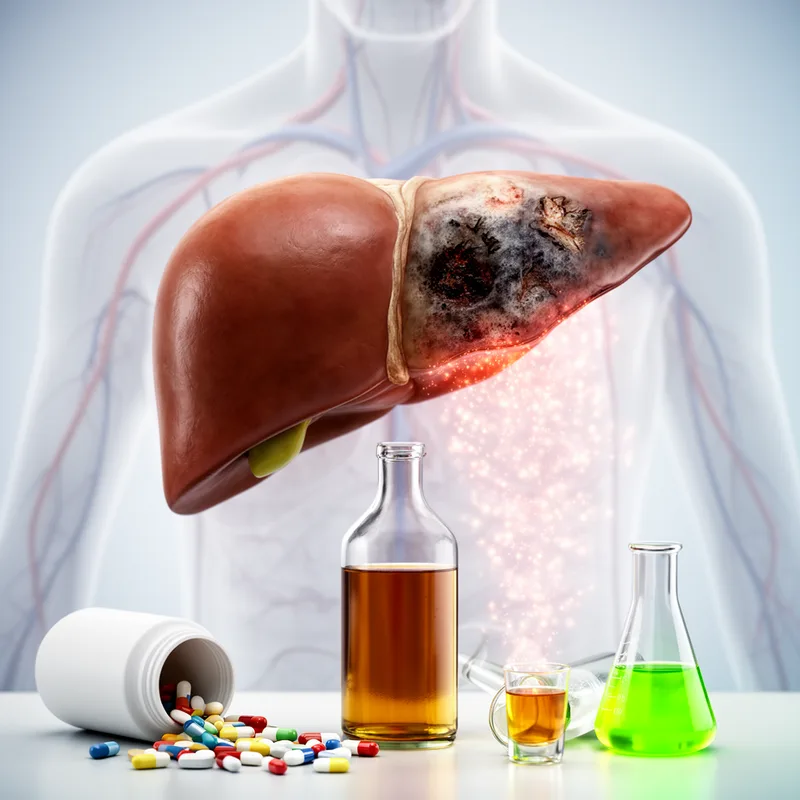
hepatotoxicity


 1
9.8
- noun
- /ˌhɛpətoʊtɒkˈsɪsɪti/
- Specialized
- The doctor explained that hepatotoxicity can occur as a side effect of certain painkillers.
Examples
-
Long-term exposure to some medications can lead to hepatotoxicity, causing severe damage to the liver.
-
The most common adverse events reported are nausea, diarrhea, vomiting, skin rash, hepatotoxicity, upper respiratory tract infections, and hypertension.
Academic text (2007) -
Also, chemical structure and known relationships to hepatotoxicity are completely ignored.
Blog text (1) -
In short, it took 11 years for the regulators to convince themselves that hepatotoxicity was a real problem, and the drug was withdrawn.
Blog text (1) -
Studies have been done showing that some of these reduce APAP hepatotoxicity, so if combined, these effects may be decreased.
Blog text (14) -
Type II hepatotoxicity appears to be chronic arsenic poisoning.
Blog text (24) -
I have observed firsthand how the FDA handles signals of hepatotoxicity from a number of different drugs.
Blog text (1) -
In conclusion, it is prudent to keep in mind that the Hepatitis B vaccine can be responsible for hepatotoxicity.
Blog text (19) -
Although pyrazinamide is always used in combination with other antitubercular drugs, the combination with rifampin has resulted in fatal hepatotoxicity.
Academic text (2005) -
Adverse effects may include GI disturbance, hepatotoxicity, rash, drug fever, or hyperuricemia, which can provoke gout.
Academic text (2005)
How Severe
- Specialized
1
9.8

- Specialized
11
3.3
Surface Forms
Morphology
hepatotoxicity = hepatotoxic (semi-transparent) = hepato + toxic + ity
The adjective 'hepatotoxic' (hepato- + toxic) makes the meaning clear to those familiar with medical combining forms, but 'hepato-' is a technical element unfamiliar to many learners.
Etymology
The word hepatotoxicity comes from the part hepato- meaning 'liver' and the word toxic meaning 'poison', so it means 'poisoning of the liver'.