
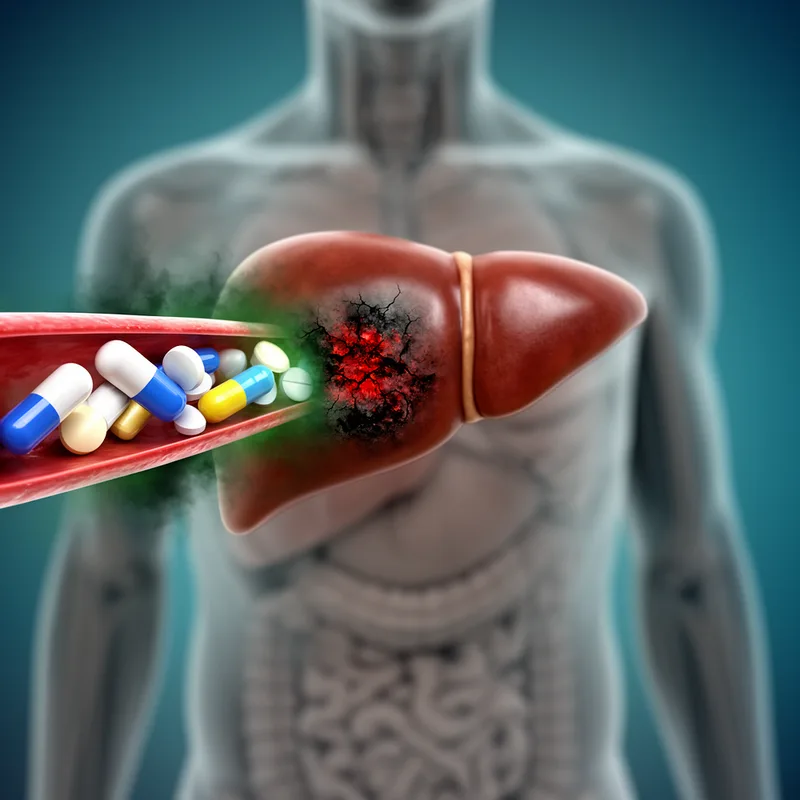
hepatotoxic


 1
9.9
- adjective
- /ˌhɛpəˈtoʊtɪk/
- Specialized
- It's essential to monitor liver function in patients taking hepatotoxic drugs to prevent complications.
Examples
-
Long-term use of certain medications can be hepatotoxic, potentially causing serious liver damage.
-
Are patients likely to receive other hepatotoxic drugs or to be at higher risk due to kinetic interactions, etc.?
Blog text (1) -
Quote high use of potentially hepatotoxic botanicals.
-
Tylenol, used on a regular basis, is hepatotoxic and can prove fatal.
Blog text (11) -
I know the FDA players, and in every case, the so-called experts inside the FDA made the wrong call (i.e., the drug was exceptionally hepatotoxic when they dismissed the signal).
Blog text (1) -
ATSDR (2001) also reported studies finding massive, acute inhalation possibly inducing neurotoxic, nephrotoxic, and hepatotoxic effects, respiratory distress, and cardiac arrhythmia.
Academic text (2006) -
Tylenol is hepatotoxic when taken in high doses and can lead to liver failure.
Surface Forms
Morphology
Etymology
Hepatotoxic joins hepato- from a Greek word for 'liver' and toxic meaning 'poison', like in toxin. So hepatotoxic means 'harmful or toxic to the liver'.