
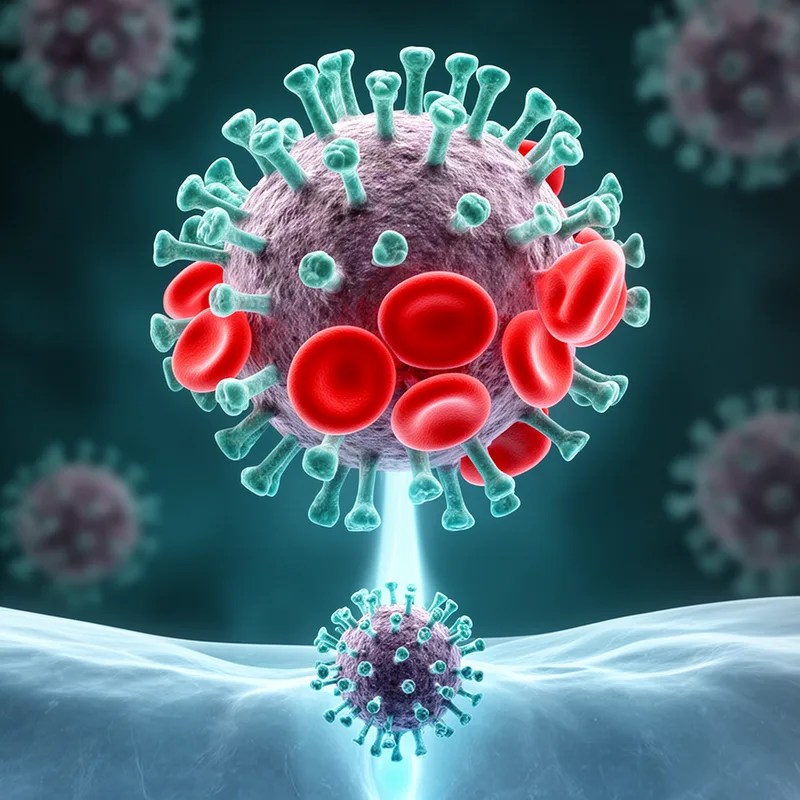
hemagglutinin


 1
9.9
- noun
- /ˌhiːməˈɡluːtɪnɪn/
- Specialized
- Understanding hemagglutinin's role in viral entry is essential for developing effective vaccines.
- hemagglutinin gene
- hemagglutinin inhibition
- hemagglutinin subtype
Examples
-
Recombinant H1, H3, and H7 hemagglutinins were used as coating antigens in all ELISA tests.
Academic text (2014) -
A one is called the hemagglutinin and this protein is essential for the attachment to a host cell receptor called sialic acid.
-
The nanomicroarray was developed to target hemagglutinin, neuraminidase, and matrix genes to identify influenza A and B viruses.
Academic text (2015) -
Primary infection with the influenza virus can lead to a heterosubtypic hemagglutinin antibody response (31).
Academic text (2014) -
The mystery virus is H5N1, short for hemagglutinin subtype 5 and neuraminidase subtype 1, both proteins on the virus surface.
Academic text (1998) -
Perhaps subtype H7N9 virus infection triggered a cross-reactive response between H7 and H3 or H1 hemagglutinins.
Academic text (2014) -
The hemagglutinin protein on the surface of the virus helps it attach to host cells.
-
In the study, researchers focused on how hemagglutinin causes red blood cells to clump together.
Synonyms
 1
9.9
A plant protein that makes blood cells stick together and makes white blood cells divide
Surface Forms
Morphology
hemagglutinin = agglutinin (semi-transparent) = hemo + agglutin + in
Formally 'hemo-' (blood) + 'agglutinin' (agent that causes clumping) yields a clear technical compound, but the terms are specialized and may be unfamiliar to general learners.
Etymology
Hemagglutinin mixes two parts that mean 'blood' and 'to stick together': hemo- (from a Greek word for 'blood') and agglutinin (from a root meaning 'to glue' or 'stick'). So, a hemagglutinin is a protein that makes red blood cells clump and helps a virus stick to and enter cells.