
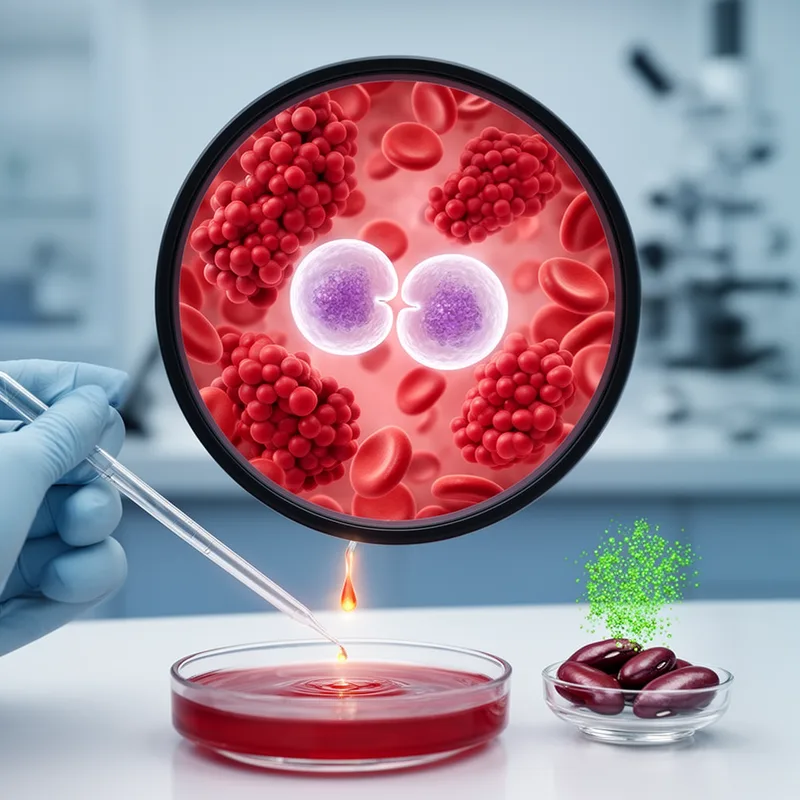
phytohaemagglutinin


 1
9.9
- noun
- /ˌfaɪtoʊˌhiːməˈɡlʌtɪnɪn/
- UK
- In the lab, researchers added phytohaemagglutinin to the cell cultures to promote cell division.
Examples
-
The scientist used phytohaemagglutinin as a reagent to study the clumping behavior of blood cells.
-
Other antigens tested for were bovine serum albumin, purified protein derivative, human serum albumin, and phytohaemagglutinin.
Academic text (1999) -
During the experiment, phytohaemagglutinin was essential for activating the immune response in the samples.
Synonyms
 1
9.9
A part on some viruses that makes red blood cells clump and helps the virus enter cells
Surface Forms
Morphology
phytohaemagglutinin = haemagglutinin (opaque) = phyto + haemagglutinin
The compound is technical and uses specialized combining forms unfamiliar to average learners, so its meaning cannot be derived by a B1 learner.
Etymology
Phytohaemagglutinin breaks into parts: phyto- meaning 'plant', haemo- meaning 'blood', and agglutinin meaning 'to stick together', like 'glue'. So, it is a plant protein that makes blood cells clump, which is why scientists use it in the lab to trigger cell activity.