
phytohaemagglutinin
- noun
- /ˌfaɪtoʊˌhiːməˈɡlʌtɪnɪn/
- UK
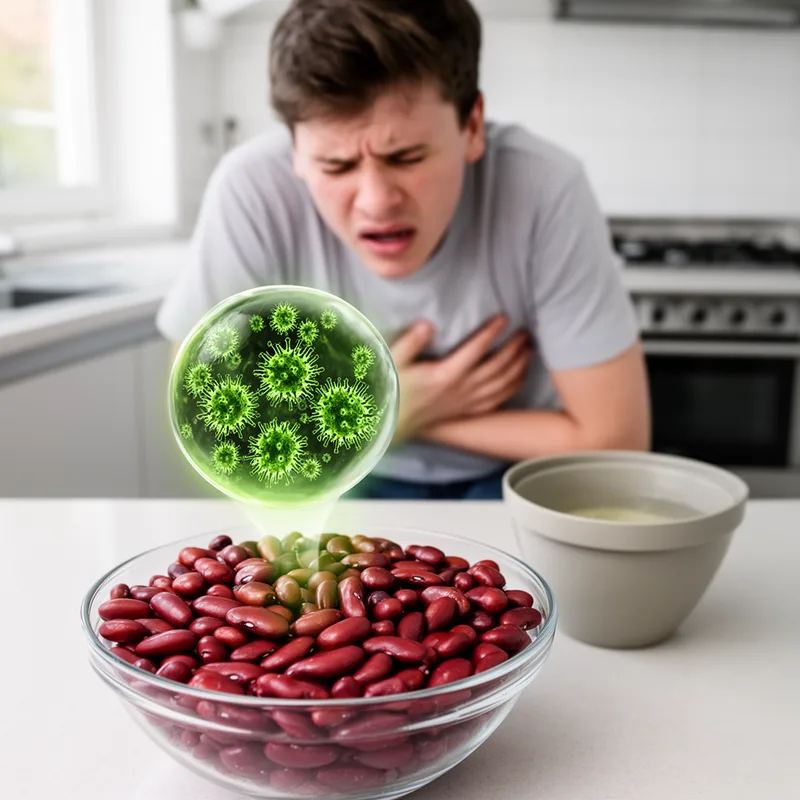
- Consuming raw red kidney beans can expose you to phytohaemagglutinin, which may cause nausea and vomiting.
Examples
-
Consuming raw red kidney beans can lead to phytohaemagglutinin poisoning.
-
Properly cooking beans destroys phytohaemagglutinin and makes them safe to eat.
-
Scientists study phytohaemagglutinin to understand its effects on the digestive system.
-
The phytohaemagglutinin levels in undercooked beans are dangerous.
-
Consuming raw red kidney beans can expose you to phytohaemagglutinin, which may cause nausea and vomiting.
-
Properly cooking beans destroys phytohaemagglutinin and makes them safe to eat.
-
The phytohaemagglutinin in uncooked beans can lead to severe gastrointestinal illness.
Surface Forms
Morphology
phytohaemagglutinin = haemagglutinin (opaque) = phyto + haemagglutinin
The formation is technical and relies on specialized combining forms, so learners are unlikely to infer the toxic-bean sense from the parts.
Etymology
Phytohaemagglutinin comes from phyto- 'plant', haemo- 'blood', and agglutinin 'to stick together', like 'glue'. So, the name warns that this is a plant protein found in some raw beans that can make cells clump and cause stomach illness if the beans are not cooked properly.

