
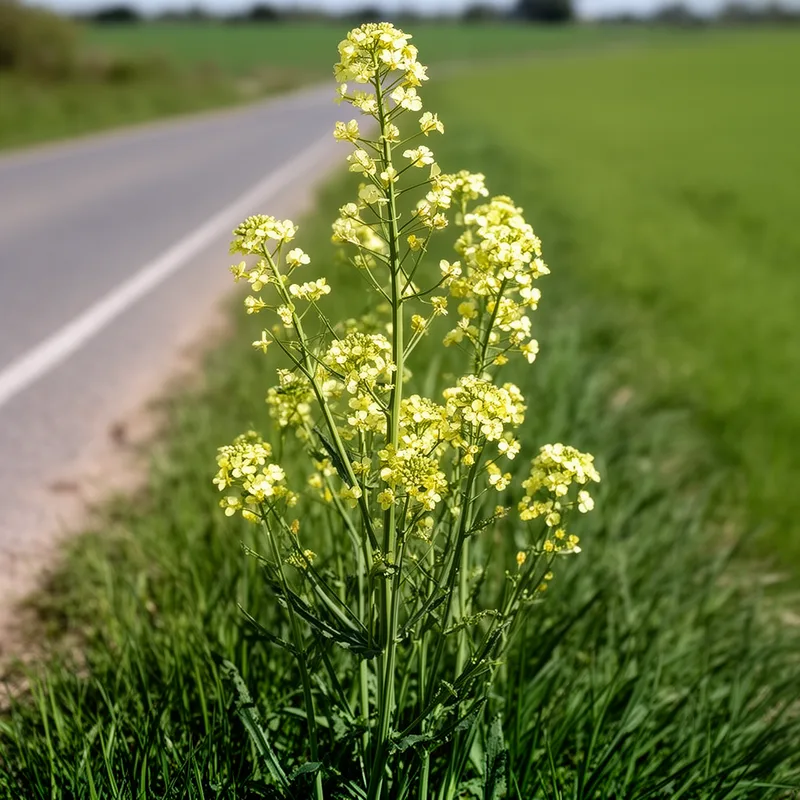
hedge mustard
- noun
- /hɛdʒ ˈmʌstərd/
- US
- The hedge mustard grew wild along the roadside, its yellow blooms standing out against the grass.
Examples
-
Some herbal remedies in the past used hedge mustard to treat throat ailments.
-
Gardeners sometimes remove hedge mustard because it can spread quickly and compete with native plants.
-
The hedge mustard blooms beautifully in spring.
-
Many gardeners appreciate hedge mustard for its resilience.
-
The hedge mustard flourished in the garden, attracting bees with its bright yellow flowers.
-
In rural areas, hedge mustard is often seen growing in fields and along fences.
-
Farmers occasionally use hedge mustard as a natural way to improve soil health.
Synonyms
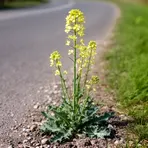
A wild mustard plant with stiff stems and pale yellow flowers
Surface Forms
Morphology
The compound 'hedge mustard' combines 'hedge' (a row of shrubs) and 'mustard' (a type of plant), so its meaning as a kind of mustard associated with hedges or hedgerows is directly derivable from the parts. This follows common English compounding patterns for plant names and would be understandable to a B1 learner who knows both constituent words.
Etymology
Hedge mustard is a simple name from gardeners and farmers: the first part hedge shows the plant often grew by hedges and roads, and the second part mustard shows its small yellow flowers looked like other mustard plants, so the name tells you it is a 'mustard-like' plant that grows near hedges.

