
Sisymbrium officinale
- noun
- Specialized
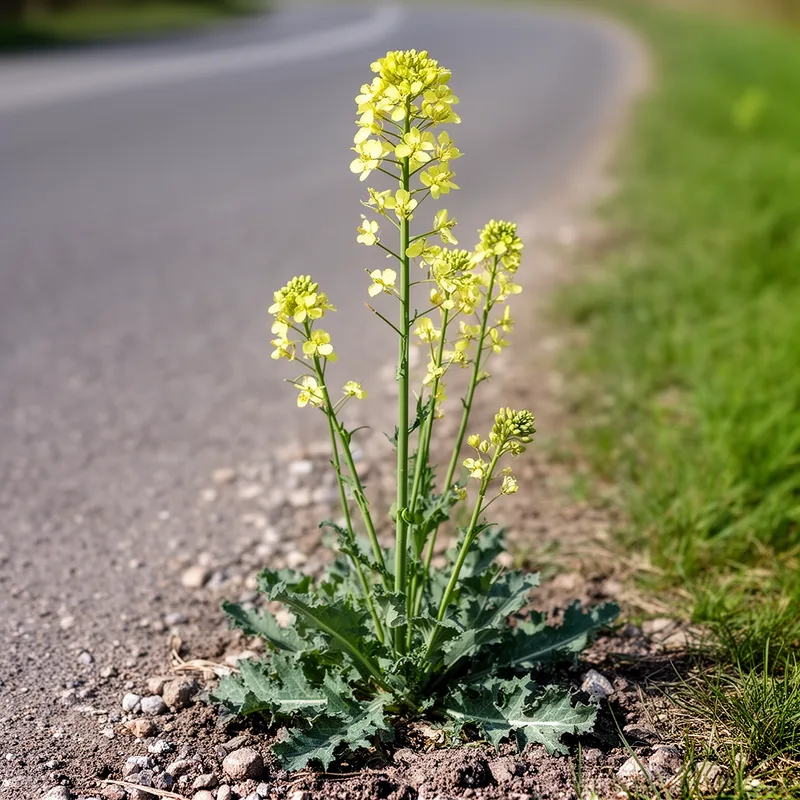
- The pale yellow flowers of Sisymbrium officinale bloom from spring to early summer.
Examples
-
Herbalists once used Sisymbrium officinale to treat throat irritations and coughs.
-
Sisymbrium officinale is commonly found growing along roadsides and disturbed sites.
-
The plant Sisymbrium officinale is often found in gardens.
-
Have you ever seen Sisymbrium officinale growing in the wild?
-
Sisymbrium officinale is often used in herbal medicine for its potential benefits, particularly in treating respiratory ailments.
-
Many people recognize Sisymbrium officinale by its distinctive pale yellow flowers that attract various pollinators.
-
In rural areas, Sisymbrium officinale can be spotted growing abundantly in fields and along the edges of paths.
Synonyms

A plant with small pale yellow flowers that grows wild along roads and fields
Surface Forms
Morphology
The binomial name is directly compositional: 'Sisymbrium' denotes a genus of herbs and 'officinale' is a Latin adjective meaning medicinal or used in remedies, so a learner who knows both parts can infer it is a species of Sisymbrium with traditional medicinal use. Scientific naming conventions (genus + epithet) are regular and cross-linguistically recognized, supporting transparent interpretation.
Etymology
Sisymbrium officinale may come from an old plant name, Sisymbrium, plus the Latin word officinale, which means 'used in medicine'. People once used this wild mustard for sore throats and coughs, so the name reminds us of its medical use.

