
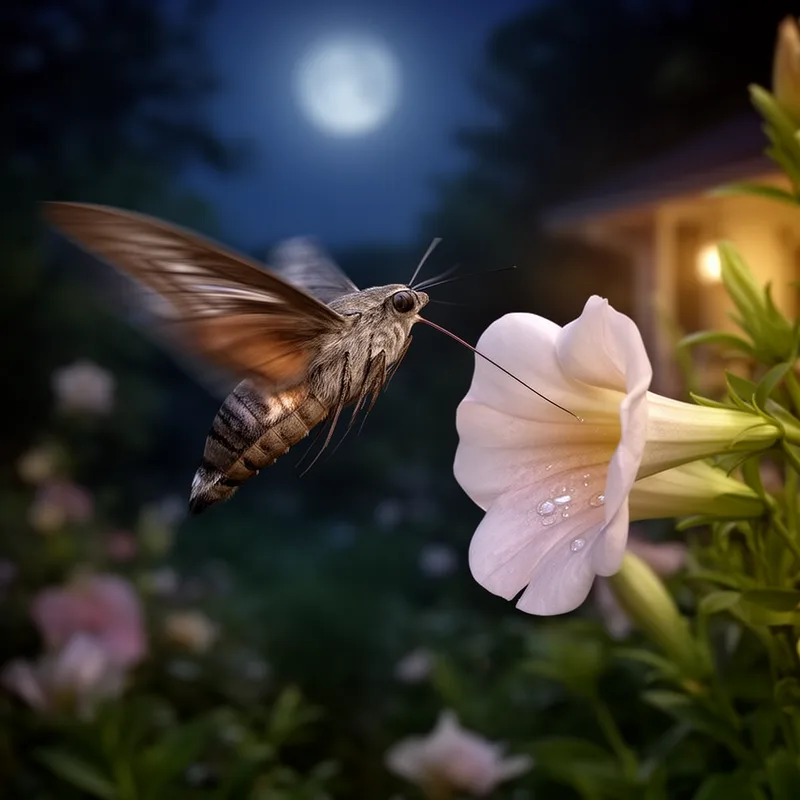
hawk moth


 1
6.5
1
6.5
- noun
- /hɔk mɔθ/
- Specialized
- During summer evenings, it's common to see hawk moths flying swiftly from bloom to bloom in search of food.
Examples
-
At rest, this very large caterpillar, a member of the hawk moth family (whose larvae are called hornworms), resembles a lichen-covered stick.
Academic text (2001) -
The hawk moth hovered gracefully over the bright flowers, using its long proboscis to sip nectar.
-
The hawk moth is known for its powerful flight, allowing it to remain airborne while feeding on flowering plants.
Synonyms
 1
8.1
1
8.1
A large moth with long wings that hovers to drink flower nectar
 1
9.9
1
9.9
A large moth with long narrow wings that hovers to feed from flowers
 1
8.4
1
8.4
A large moth that hovers like a hummingbird to feed from flowers

A moth that hovers like a hummingbird while it drinks nectar from flowers
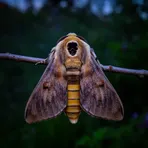
A large moth with a skull-shaped dark mark on its back
Surface Forms
Morphology
The compound is a straightforward modifier+noun combination: 'hawk' + 'moth' signals a moth that has hawk-like qualities (strong, fast flight and hovering), so the overall meaning is directly inferable from the parts. There is no idiomatic or metaphorical shift beyond ordinary descriptive compounding, and this pattern is cross-linguistically common, so a B1 learner who knows both words can understand the MWE.
Etymology
Hawk moth gets its name from the way this insect flies: people saw its long, narrow wings and fast, strong flight and thought it flew like a small hawk, often 'hovering' over flowers, so they called it a hawk moth. That's why the name tells you it is a moth known for hawk-like, powerful flight and for hovering while it feeds.