
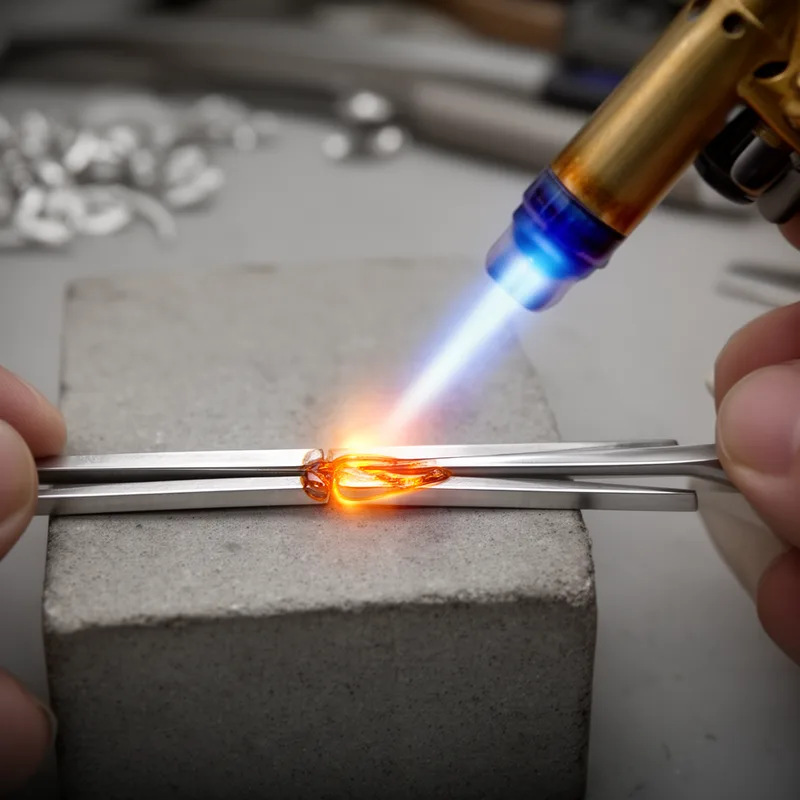
hard solder
- noun
- /hɑrd ˈsɔldər/
- Specialized
- Jewelers often use hard solder to join pieces of gold or silver jewelry.
Examples
-
The technician heated the metal until the hard solder flowed smoothly into the seam.
-
Because hard solder melts at a higher temperature, it is ideal for creating strong, durable joints.
-
The jeweler uses hard solder for delicate repairs.
-
Have you ever worked with hard solders before?
-
Jewelers often use hard solder to join pieces of gold or silver jewelry.
-
Because hard solder melts at a higher temperature, it is ideal for creating strong, durable joints.
-
The technician heated the metal until the hard solder flowed smoothly into the seam.
Synonyms
 4
7.0
4
7.0

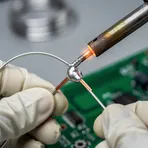
A soft metal mix that melts to join metal parts
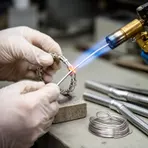
A metal filler that contains silver for joining metal parts like jewelry or pipes
Antonyms
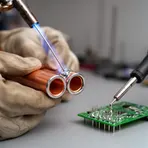
How Hot

Surface Forms
Morphology
The compound is partly compositional: a B1 learner who knows 'hard' and 'solder' can infer that this refers to a type of solder contrasted with 'soft' solder (i.e. relatively stronger or requiring higher heat). However the precise technical sense (higher melting point, use for brazing rather than ordinary low-temperature soldering) is specialized knowledge, so the relation is not fully transparent without some exposure.
Etymology
Hard solder is named because the solder is hard to melt and needs much more heat than soft solder. Because it melts hotter and often contains metals like copper, it flows into the joint and makes a very strong, lasting connection between metal pieces, which is why people use it for strong, durable repairs and jewelry.