
hard lead
- noun
- /hɑrd lɛd/
- Specialized
- Recycling batteries often yields hard lead containing various metallic impurities.
Examples
-
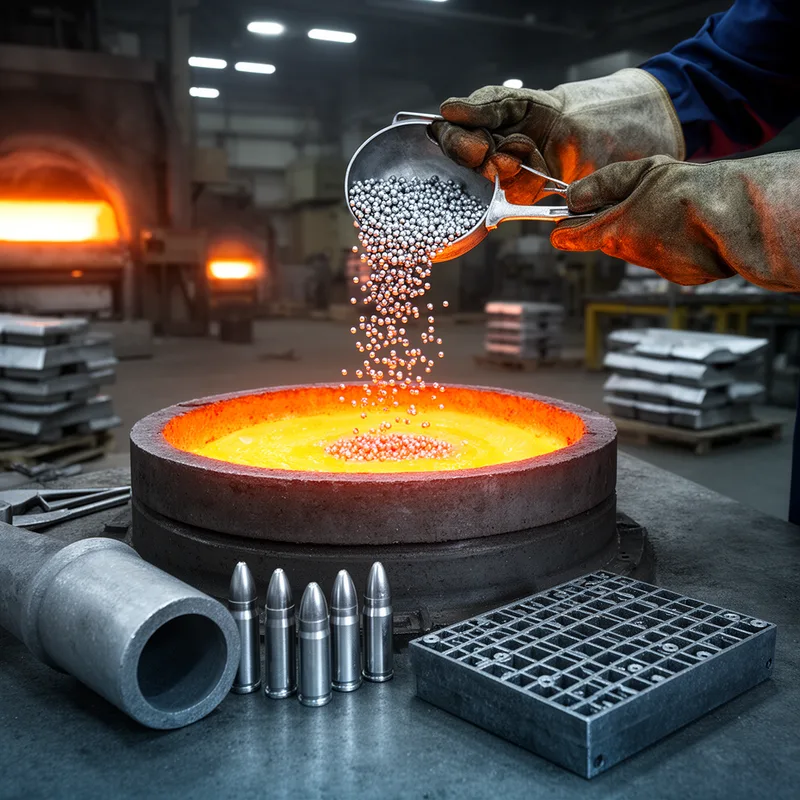
Because of its strength, hard lead is preferred in manufacturing certain pipes and casings.
-
The factory uses hard lead for its batteries.
-
Certain bullets are made from hard lead to withstand higher pressures.
-
Many manufacturers prefer hard leads for their products.
-
Because of its strength, hard lead is preferred in manufacturing certain pipes and casings.
-
Certain bullets are made from hard lead to withstand higher pressures.
-
Recycling batteries often yields hard lead containing various metallic impurities.
Synonyms

A metal made from lead and a little of another metal used to make parts stronger and resist corrosion
Surface Forms
Morphology
The meaning 'lead that is made harder...' is directly and transparently derived from combining 'hard' (firm, solid) with 'lead' (the metal) in a standard adjective + noun composition. Even though the term refers to a technical manufacturing process, the semantic relationship is clear and a B1 learner who knows both constituents can infer the intended meaning.
Etymology
Hard lead comes from the simple idea of making soft lead stronger by adding a harder metal. Workers mixed in a metal like antimony so the soft, bendy lead became hard and could be used in pipes, bullets, and other parts, so hard lead means 'lead made harder for industrial use'.

