
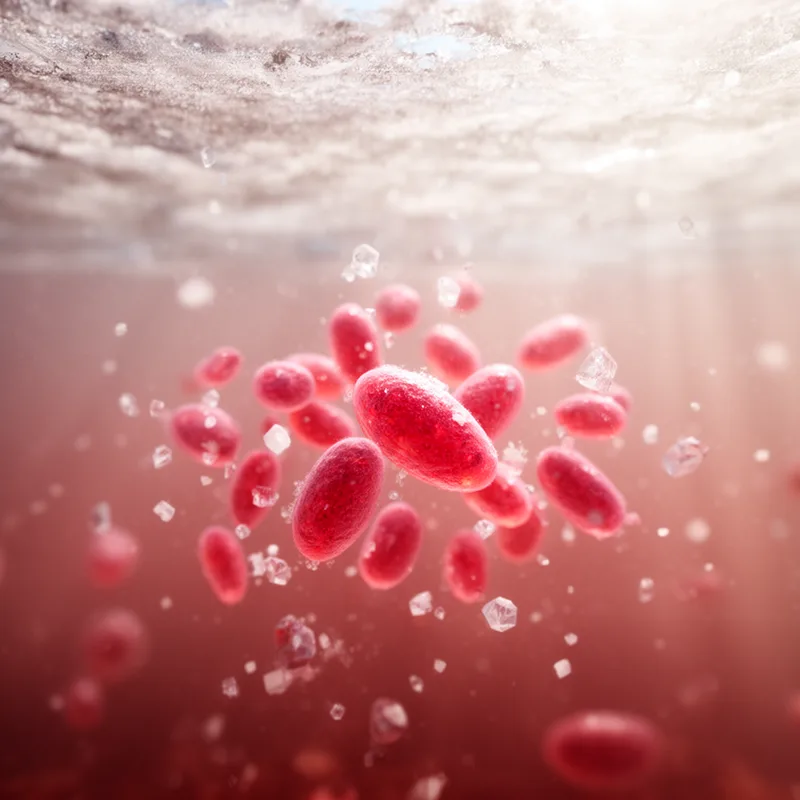
halobacter
- noun
- /ˈheɪloʊˌbæktər/
- Specialized
- When salt concentrations rise, halobacter flourish where other organisms cannot.
Examples
-
Scientists study halobacter to understand how life survives in extreme conditions.
-
The Dead Sea is home to abundant halobacter, coloring the water reddish hues.
-
The halobacter thrives in the Dead Sea.
-
Many halobacteria can survive extreme salinity.
-
Scientists study halobacter to understand how this microorganism survives in environments with high salt concentrations.
-
The Dead Sea is known for its unique ecosystem, which includes halobacter that thrive in its salty waters.
-
In salt flats, halobacter can be found in large numbers, showcasing their ability to adapt to extreme saline conditions.
Synonyms


 1
9.9
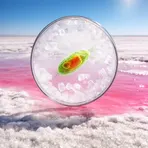
A small living thing that lives well in very salty places like salt lakes
 1
9.9
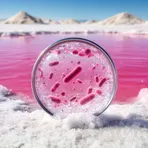
A tiny living thing that lives in very salty places like salt flats

A microbe that needs very salty water or soil to live
Surface Forms
Morphology
halobacter = bacterium (semi-transparent) = halo + bacter
Formed from technical combining forms 'halo-' (salt) + 'bacter' (microbe); the 'bacterium' base is recognizable but the 'halo-' salt sense is specialized, so the meaning is only partially guessable by average learners.
Etymology
Halobacter comes from two parts: halo- meaning 'salt' and -bacter meaning 'bacteria'. So halobacter are tiny microbes that live in very salty places, which is why you find them in salt flats and the Dead Sea.