
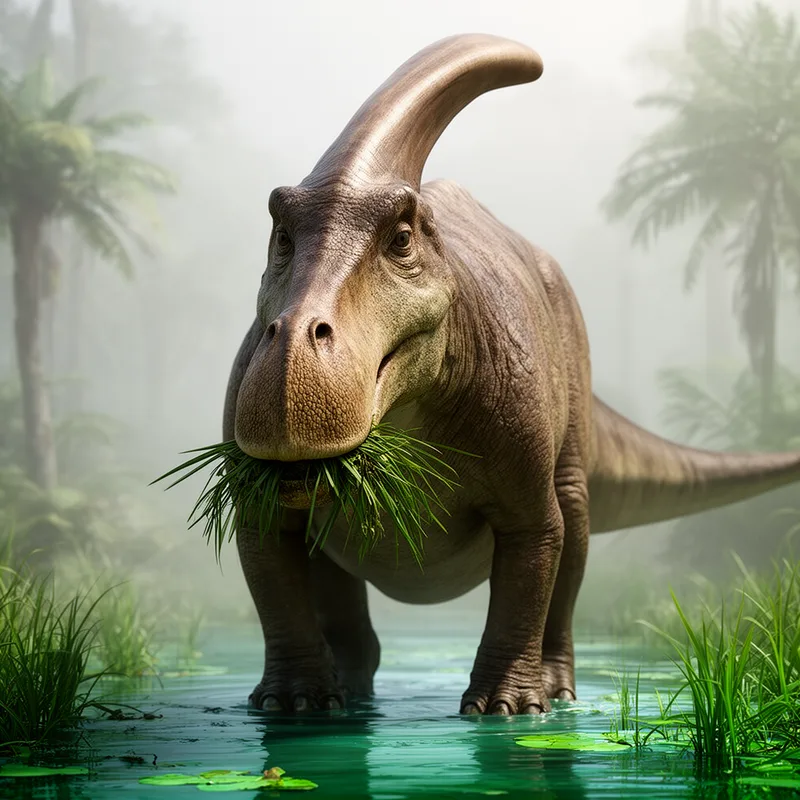
hadrosaur
 1
9.9
1
9.9

- noun
- /ˈhædrəˌsɔr/
- During the Cretaceous Period, hadrosaurs roamed in herds, which provided safety against predators.
- duck-billed hadrosaur
- hadrosaur skeleton
- herd of hadrosaurs
Examples
-
A group of hadrosaurs grazed peacefully in the lush valley, their duck-billed snouts reaching for leaves.
-
They could feed a baby hadrosaur.
Fiction book (1990) -
The car started forward, and Tim looked back at the hadrosaurs.
Fiction book (1990) -
In the same area were several duck-billed hadrosaurs, which in comparison looked much smaller.
Fiction book (1990) -
As the hadrosaurs whip past, Paul and Amanda climb up into a tree.
Fiction book (2001) -
Several infant hadrosaurs scampered around the adults, eating the leaves that dropped from the mouths of the larger animals.
Fiction book (1990) -
In an effort to escape the oncoming raptors, Grant leads the group right into the stampeding herd of hadrosaurs.
Fiction book (2001) -
Responding to the growls, a herd of grazing hadrosaurs suddenly flees across the open space.
Fiction book (2001) -
Scientists discovered fossilized tracks showing that hadrosaurs were often bipedal as they searched for plants.
Synonyms
 390
3.0
390
3.0
A large extinct animal from long ago, like T. rex


 1
7.4
1
7.4
A large plant-eating dinosaur with a long, flat beak like a duck
 1
9.9
1
9.9
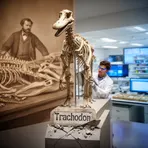
A name once used for a duck-billed dinosaur that scientists no longer use
A large plant-eating dinosaur with a duck-like beak that walked on two legs
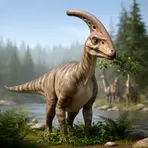
A large plant-eating dinosaur with a tall hollow crest on its head
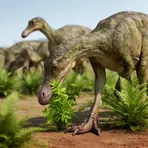
Plant-eating dinosaurs with feet like a bird, for example duck-billed dinosaurs
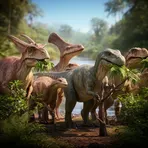
A group of dinosaurs that eat plants like duck-billed hadrosaurs and Iguanodon
Surface Forms
Morphology
hadrosaur = dinosaur (semi-transparent) = hadro + saur
The parts signal a reptilian, dinosaur-like creature (learners familiar with 'dinosaur' or the combining form '-saur' can infer it's a dinosaur), but the precise meaning 'duck-billed hadrosaur' is not deducible from the components alone.
Etymology
Hadrosaur comes from Greek parts hadro- meaning 'thick' or 'large' and -saur meaning 'lizard', the same -saur you see in dinosaur. So a hadrosaur is literally a 'large lizard', which fits these big, mostly plant-eating dinosaurs with a duck-like bill.