

gyromitra
- noun
- /ˌdʒaɪrəˈmɪtrə/
- Specialized
 :
gyromitra
:
gyromitra
- Some species of gyromitra are highly toxic and can be mistaken for edible mushrooms.
Examples
-
The gyromitra is often mistaken for a true morel.
-
The forest floor was dotted with gyromitra after the spring rains.
-
Mycology students collected several gyromitra to study their unique structure.
-
Some gyromitras can be highly toxic if consumed.
-
Mycology students collected several gyromitra to study their unique structure.
-
Some species of gyromitra are highly toxic and can be mistaken for edible mushrooms.
-
The forest floor was dotted with gyromitra after the spring rains.
Compounds
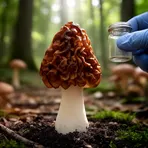
- Specialized
A brown wild mushroom with a wrinkled cap and white stem that may be poisonous

- Specialized
A brown wild mushroom with a wrinkled cap and thick stalk that can be poisonous if eaten

- Specialized
A poisonous mushroom with a wrinkled, brain-like cap often mistaken for edible morels
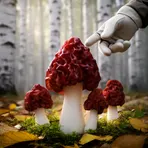
- Specialized
A wild mushroom with a deep reddish brown cap and a white stem that can be toxic

- Specialized
A large often poisonous mushroom like a morel with a wrinkled yellow-brown cap and uneven stalk that grows in spring
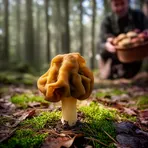

- Specialized
A false morel with a brown rounded cap and rosy folded stalk that grows on dead wood
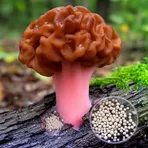
- Specialized
A brown mushroom with a pink stem and smooth round spores that grows on wood
Surface Forms
Etymology
Gyromitra comes from Greek parts gyro- meaning 'circle' or 'turn' (as in the word gyrate) and -mitra meaning 'cap' or 'headband'. So the name shows the mushroom's twisted, brain-like cap and fits the 'false morels', some of which are poisonous.

