

gum tree
 1
3.7
1
3.7

- noun
- /ɡʌm tri/
- UK
- The May Cottage overlooked the Jamison Valley—the gum trees, the streams, the ancient stone pillars.
- Malaysian gum tree
Loading YouTube…
Watch on YouTubeHe's been busy putting up lights on like feature plants of ours, like this gum tree, this beautiful grass tree with multiple heads.
- He's been busy putting up lights on like feature plants of ours, like this gum tree, this beautiful grass tree with multiple heads.
Examples
-
Gum trees, dirt, the smell of the great Australian bush.
-
The gum trees, which were also new to me, of course, are more delicately lovely than expected.
Blog text (30) -
His chair was under a sweet gum tree.
Fiction book (1993) -
We sat out under the sweet gum tree.
Fiction book (2000) -
Clouds rise out of the valley and collect above us, leaving us a clear view of the gum trees and peaks.
Fiction book (2001) -
Two of them are searching out the vacant field, climbing the gum tree there in the hot sun and singing all the way up.
Fiction book (2000) -
And crowds gather under the gum tree Sunday mornings and sometimes late, late in the weekday evenings.
Fiction book (2000) -
Around me, enormous gum trees rose from thickets of fern and brush and soared toward a gray and stone-smooth sky.
Fiction book (1998) -
The Blue Mountains are an hour west of Sydney—sharp granite peaks forested with gum trees so thick they give off a light blue haze.
Fiction book (2001) -
Children often climb the tall gum trees in their backyard to watch the sunset.
Synonyms
 13
6.8
13
6.8
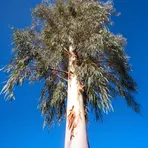
A tree, like eucalyptus, that makes sticky sap used in products
 11
5.9
11
5.9
A tall Australian tree with leaves used to make oil and wood
 3
3.9
3
3.9
A tall tree from Australia with leaves that smell strong and bark that peels
 1
8.1
1
8.1
A tall Australian tree with aromatic leaves and rough bark
 1
8.8
1
8.8
A large Australian eucalyptus tree with smooth bark and reddish wood

 1
6.0
1
6.0
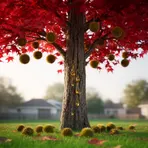
A North American tree with spiky round seed balls and sweet-smelling sap and red leaves in autumn

A tall Australian tree with reddish, strong wood used for building that grows along riverbanks
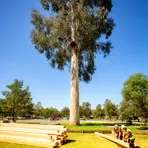
A very tall eucalyptus tree from eastern Australia grown for its strong wood and for parks
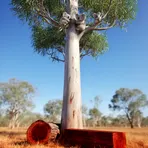
A tall tree from eastern Australia with hard wood and smooth bark

A tall Australian tree with crooked branches that grows by rivers and has strong reddish wood
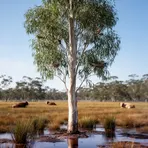
A medium-sized tree from southern Australia that grows in damp or swampy places
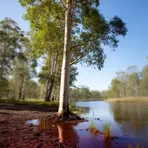
A tall Australian tree that grows in wet soil near rivers

A large Australian gum tree with spotted, patchy bark often called spotted gum
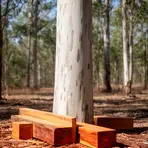
A large Australian tree with smooth spotted bark and strong wood
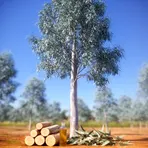
A tall fast-growing eucalyptus tree with bluish young leaves used for timber and medicine

A small evergreen tree from Tasmania called the cider gum, often grown in gardens for its blue-grey leaves
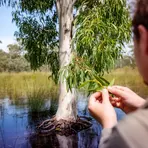
A medium-sized tree from Australian wetlands with smooth bark and camphor-scented leaves

A small or medium tree from Australia and Tasmania with smooth pale bark that peels in strips

An Australian tree with smooth bark and lemon-scented leaves called lemon-scented gum
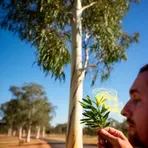
A tall Australian tree with smooth bark and a strong lemon smell from its leaves
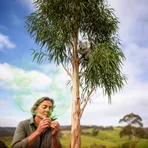
A tall tree from Tasmania with leaves that smell like mint

A tropical tree with smooth red bark that gives a sticky resin used for varnish
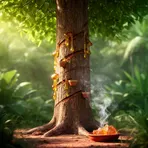
A tropical tree that makes fragrant sap burned for its smell

A North American tree with star-shaped leaves, spiky round fruit, and sticky fragrant sap

A tall swamp tree that has pale, soft wood used for making things
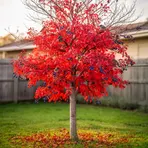
A tree that loses its leaves in autumn and has bright red leaves and small blue berries
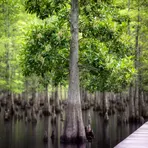
A tree in North America that grows in swamps, has hard wood and is often called a gum tree

A tall tree in eastern North America with horizontal branches and bright red autumn leaves
Surface Forms
Morphology
The meaning 'a tree that produces resin or gum' is directly and compositionally derived from 'gum' (resin-producing) + 'tree' (a tall plant), so a B1 learner who knows both constituent senses can infer the compound meaning. This noun-compound follows a common, cross-linguistic pattern of modifier + head and is therefore immediately comprehensible rather than idiomatic.
Etymology
Gum tree comes from the simple image of a tree that gives sticky gum from its bark. People saw the sticky 'sap' and called that tree a 'gum tree', so today gum tree means a tree that makes sticky, sweet-smelling sap.