
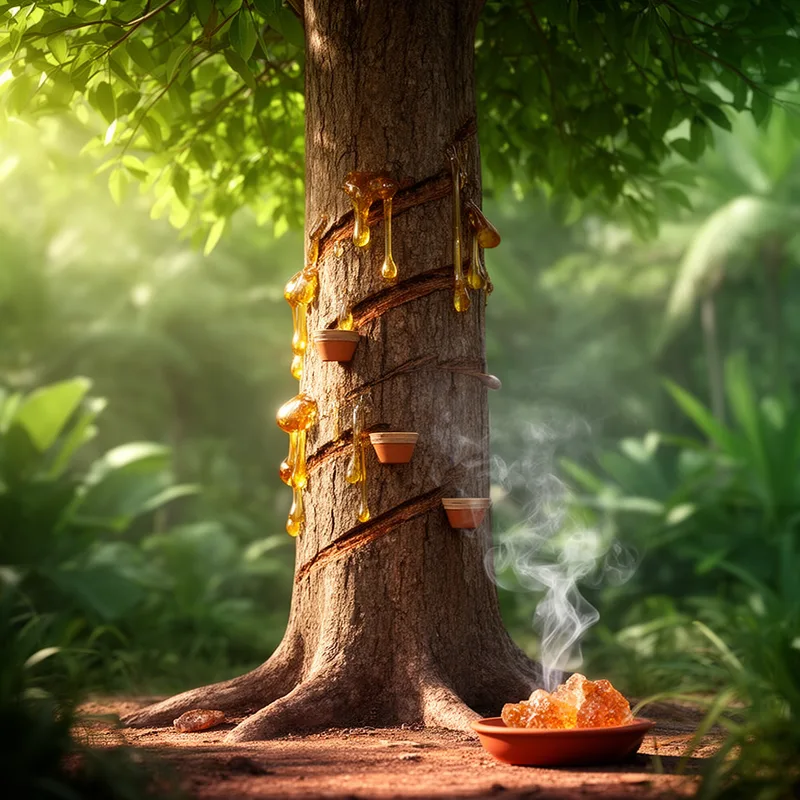
incense tree
- noun
- /ˈɪnˌsɛns tri/
- Many cultures use the incense tree for rituals.
Examples
-
The resin from the incense tree is valued in religious ceremonies.
-
Villagers collected sap from the incense tree to sell at the local market.
-
Botanists have identified several species of incense trees in Southeast Asia.
-
The incense tree is known for its aromatic resin.
-
The incense tree is well-known for its sap, which is often used in ceremonial rituals.
-
Many cultures value the fragrance of the incense tree for enhancing spiritual experiences.
-
The resin from the incense tree is harvested to create aromatic incense burned during meditation.
Synonyms
A tree that makes a fragrant gum called frankincense used as incense
A group of trees that make frankincense resin used as incense
A tree from India that makes a fragrant resin used as medicine and incense
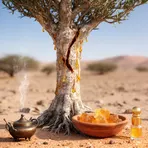
A small tree from eastern Africa and Asia that makes a sticky fragrant substance used in perfume and incense
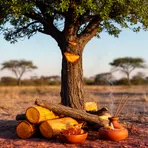
A South American tree from Argentina and Paraguay with fragrant wood used for incense
Surface Forms
Morphology
The compound meaning (a tree that produces or is used for incense) is directly and transparently built from 'incense' (material burned for fragrance) + 'tree' (a perennial woody plant). This noun–noun composition follows a common, cross-linguistic pattern (like 'apple tree' or 'olive tree') so a B1 learner who knows both constituents can readily infer the MWE's meaning.
Etymology
Incense tree comes from the simple image of a tree that makes a sticky, good-smelling sap people dry and burn as incense. That's why incense tree means a tree that produces the fragrant resin used as incense today.

