
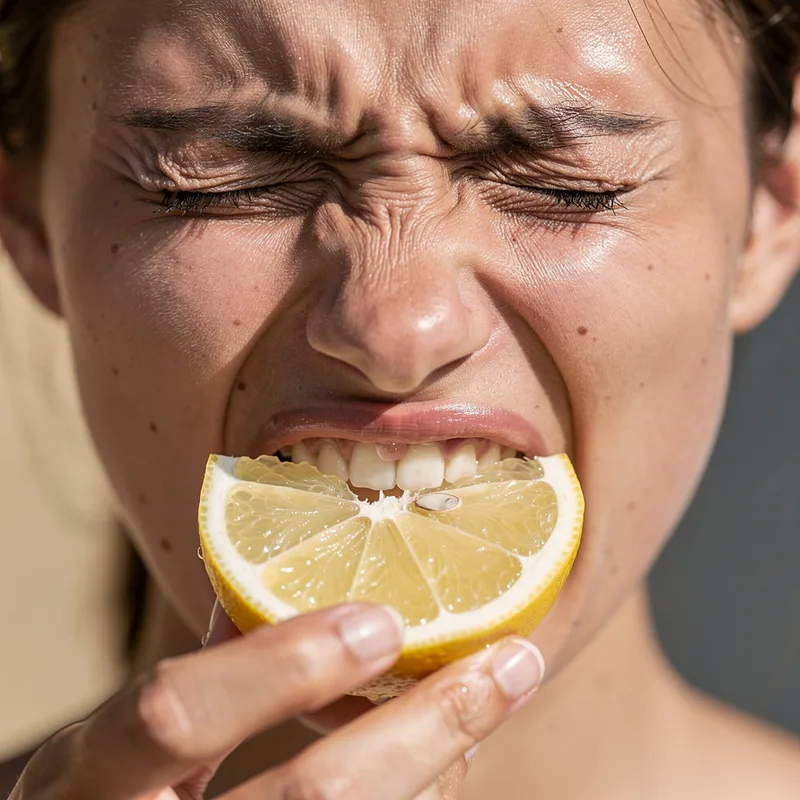
to grimace
 29
4.4
29
4.4

- verb
- /ˈɡrɪməs/
- She grimaced in pain as the doctor pressed on her injured ankle.
Loading YouTube…
Watch on YouTubeHe's he's sort of grimacing and he's, you know, he, oh, he looks like Edward G Robinson.
- He's he's sort of grimacing and he's, you know, he, oh, he looks like Edward G Robinson.
- In the original German Fratzen, buffoonery literally means like, making faces, grimacing, right?
- But that it doesn't affect whether I'm smiling or whether I'm grimacing or, or whatever I'm doing.
- The auteur grimaced and said very interesting, great stuff, loved it.
Examples
-
Willcox Hillyer looks in pain; he grimaces as they walk along.
Fiction book (1991) -
I started to sit up and grimaced at a slight burning in one wrist.
Fiction book (1991) -
I noticed you grimace when he said corny.
-
And this woman started grimacing, as if she wanted to scream.
-
"What did you hear?" The little man grimaced and ran a hand over his bald head.
Fiction book (1990) -
"Could that be it?" Han grimaced before he could stop himself.
Fiction book (1991) -
Pain stopped her, and she grimaced at the tearing sensation in her neck.
Fiction book (1991) -
"Nothing tasty out there," he said to Doug, who grimaced and nodded.
Fiction book (1990) -
Dave took a sip and grimaced; the stuff had evidently been brewing for the past week.
Fiction book (1991) -
The little boy grimaced when he accidentally stepped on a sharp toy.
Synonyms
 22
5.0
22
5.0
To make your face show a strong feeling like pain or dislike
 18
3.2
18
3.2
Move parts of your face to show dislike, pain, or to be funny
 1
5.5
1
5.5
Make a face to show dislike or discomfort
Antonyms


How Intense

Surface Forms
Etymology
Grimace comes from an old French word meaning 'to make a face'. A helpful way to remember it is to think of a twisted grin—so, to grimace is to twist your face to show pain, disgust, or awkward amusement.