

to make a face
 18
3.2
18
3.2

- idiom
- Everyone in my group made a face.
- make a face, saying
- Then I made a face
Examples
-
The dark, foamy brew was bitter, and she made a face.
Fiction book (1991) -
Higgins thought I had made a face or something.
Fiction book (1993) -
Did you just make a face?
-
"What is going on?" She made a face at the smell of smoke.
Fiction book (1991) -
Jamie took a small sip of the wine, made a face, and put it down.
Fiction book (1992) -
Then she made a face as if there was something bitter on her tongue.
Academic text (2007) -
Well, you're making a face like you got a problem.
-
Casilda rolled her eyes and made a face, and both girls erupted with laughter.
Fiction book (1992) -
My fiance made a face and said isn't that what vegans eat?
-
She made a face when she tasted the sour lemon.
Synonyms
 160
1.0
160
1.0
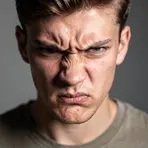
To bring the eyebrows together and wrinkle the forehead to show dislike or concentration
 41
3.4
41
3.4
To push out your lips to show that you are annoyed or disappointed
 33
4.1
33
4.1
To give an angry look to show you do not like something
 29
4.4
29
4.4
To twist your face to show pain, disgust, or a forced smile
 16
2.3
16
2.3
Give someone a worried or angry look to show you do not like them
 1
5.5
1
5.5
Make a face to show dislike or discomfort
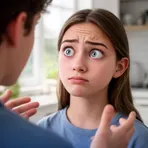
To move your eyes away from someone to show you are annoyed or do not believe them
Antonyms


How Expressive
39
5.6
 29
4.4
18
3.2
33
4.1
160
1.0
9
4.5
29
4.4
18
3.2
33
4.1
160
1.0
9
4.5
Surface Forms
Morphology
The meaning 'to contort the muscles of the face to show an emotion' is directly and transparently derived from 'make' (to cause or produce) plus 'face' (the facial expression), following a common English pattern 'make + noun' meaning 'produce' (e.g., make a sound, make a mess). This compositional pattern is cross-linguistically common (e.g., French faire une grimace, Spanish poner cara), so a B1 learner who knows the constituents would readily infer the MWE meaning.
Etymology
The verb make a face comes from the simple act of making your face show what you feel: people twist their mouth, scrunch their nose, or squint their eyes to show dislike, pain, or to be funny. So make a face means 'to move your face to show annoyance, dislike, or another feeling'.