

greater burdock
- noun
- /ˈɡreɪtər ˈbɜrdɒk/
- Specialized
- The heart-shaped leaves of greater burdock can be seen along the edges of woodlands in early summer.
Examples
-
Herbal remedies sometimes include extracts from greater burdock for their purported health benefits.
-
Greater burdock is often grown in gardens for its edible root and medicinal properties.
-
The greater burdock is known for its large heart-shaped leaves.
-
Many herbalists use greater burdock for its medicinal properties.
-
Greater burdock is often grown in gardens for its edible root and medicinal properties.
-
Herbal remedies sometimes include extracts from greater burdock for their purported health benefits.
-
The heart-shaped leaves of greater burdock can be seen along the edges of woodlands in early summer.
Synonyms

A large plant with broad heart-shaped leaves that people use as food and medicine
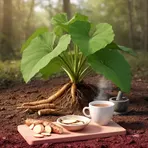
A plant with large heart-shaped leaves and edible roots used in cooking and traditional medicine
Surface Forms
Morphology
The phrase 'greater burdock' is a straightforward adjective + noun composition: 'greater' = larger and 'burdock' = the plant, so a learner who knows both words will infer it refers to a larger species or variety of burdock. This follows a common and transparent comparative/adjective pattern found across languages, making the meaning directly derivable from the constituents.
Etymology
Greater burdock gets its name from being the larger kind of burdock and from its sticky seed heads. People may have called it greater because it is bigger, and burdock because its 'burrs' stuck to clothes and animal fur, so the name points to a big plant with sticky burrs.

