
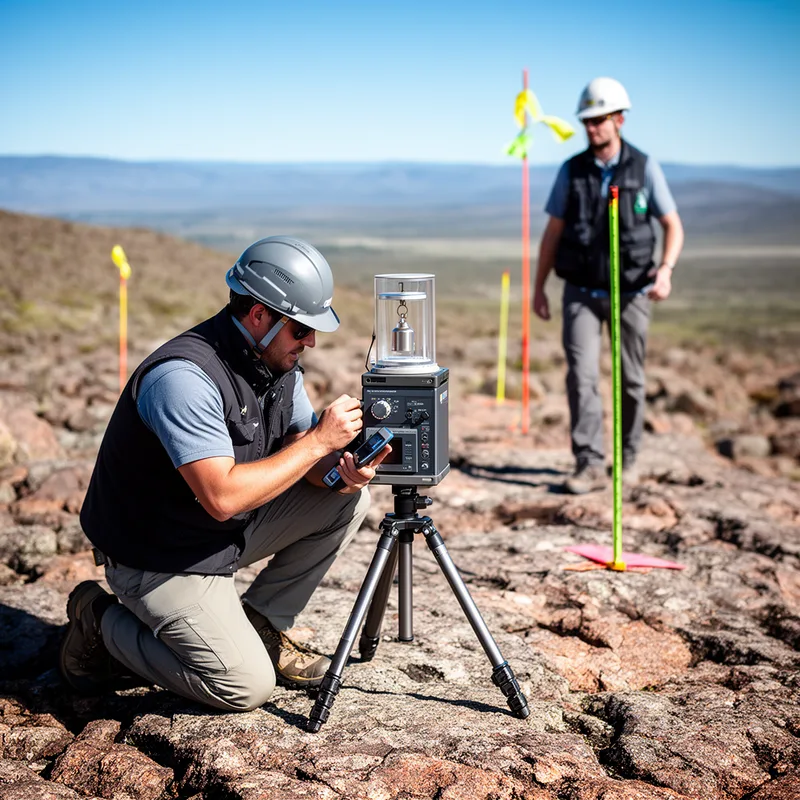
gravity meter
- noun
- /ˈɡrævɪti ˈmiːtər/
- Specialized
- The gravity meter recorded a significant change.
Examples
-
The geologists used a gravity meter to detect underground mineral deposits.
-
By analyzing data from the gravity meter, scientists identified subtle changes in Earth's gravity.
-
A portable gravity meter is essential for field surveys in remote areas.
-
We installed a new gravity meter in the lab.
-
The scientist used a gravity meter to detect minute changes in the Earth's gravitational field.
-
By analyzing data from the gravity meter, researchers were able to identify areas with unusual geological formations.
-
The engineer calibrated the gravity meter to ensure accurate readings during the experiment.
Synonyms


 1
9.9
1
9.9
An instrument that measures small changes in Earth's gravity
 1
9.9
1
9.9
A tool that measures how fields like gravity or magnetism change over distance
Surface Forms
Morphology
The compound is directly compositional: 'gravity' names the physical force and 'meter' is a productive English suffix/word for a measuring instrument, so a learner who knows both words can infer an instrument for measuring gravity. This noun-compound pattern (like 'speedometer' or 'thermometer') is cross-linguistically common and therefore highly transparent to B1 learners.
Etymology
The compound gravity meter comes from gravity (the Earth's pull) and meter (a device that 'measures'). So it names a small tool that reads tiny changes in how strongly the Earth pulls, which is why it means a device for measuring variations in Earth's gravity.