
granulomatous


 1
9.9
- adjective
- /ˌɡrænjʊˈloʊmətəs/
- Specialized
- Nasal tuberculosis is a rare, chronic, granulomatous infection caused by Mycobacterium tuberculosis.
- granulomatous inflammation
- granulomatous disease
- granulomatous reaction
Loading YouTube…
Watch on YouTubeThey produce a lot of granulomatous reactions or foreign body reactions.
- They produce a lot of granulomatous reactions or foreign body reactions.
Examples
-
Sarcoidosis is a systemic granulomatous disease with a widely variable clinical course.
Academic text (2008) -
Silicosis: A granulomatous disease, often primarily of the lung, caused by exposure to silica dust.
Academic text (2018) -
They produce a lot of granulomatous reactions or foreign body reactions.
-
Pathological material taken from the mass revealed granulomatous reaction for tuberculosis.
Academic text (2007) -
Histologically, there is no evidence of tissue invasion or granulomatous inflammation.
Academic text (2004) -
The patient was diagnosed with a chronic granulomatous inflammation that was consistent with tuberculosis.
Academic text (2002) -
Histopathologic examination will reveal no invasion of the mucosa and no granulomatous reactions.
Academic text (2004) -
A biopsy revealed chronic granulomatous inflammation (figure 1, A and B).
Academic text (2005) -
Sarcoidosis is a systemic granulomatous disease with widely variable clinical characteristics, including numerous head and neck manifestations.
Academic text (2008) -
The patient was diagnosed with a chronic granulomatous inflammation consistent with tuberculosis.
Synonyms
 36
6.8
Causing swelling, redness, and pain in a part of the body
Surface Forms
Morphology
Etymology
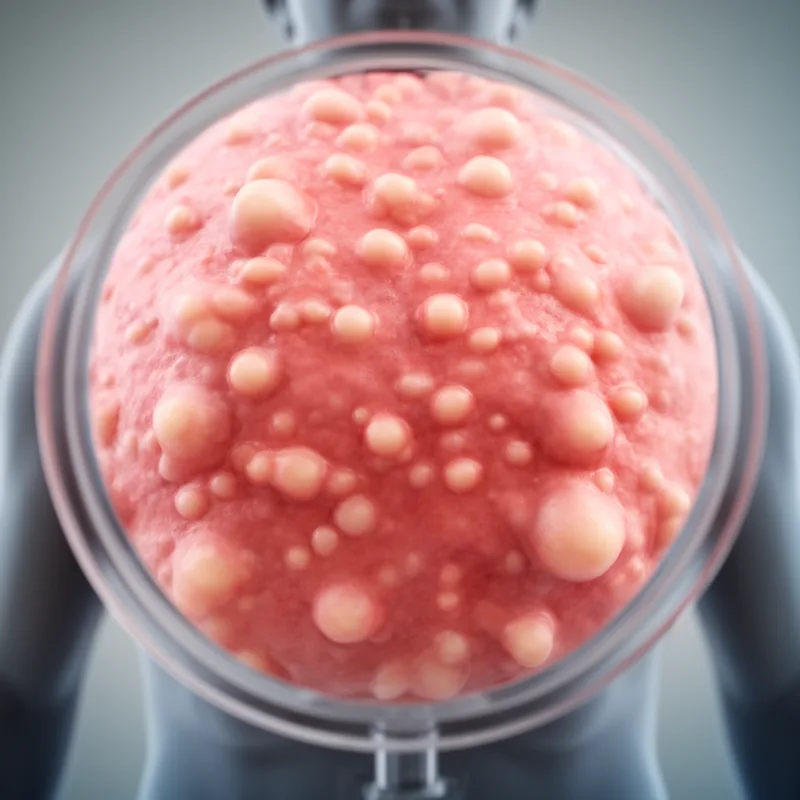
Granulomatous comes from granule, meaning 'small grain', and the medical ending -omatous, which shows a kind of 'growth' or condition. So, granulomatous describes tissue with many tiny, grain-like lumps of inflammation.