
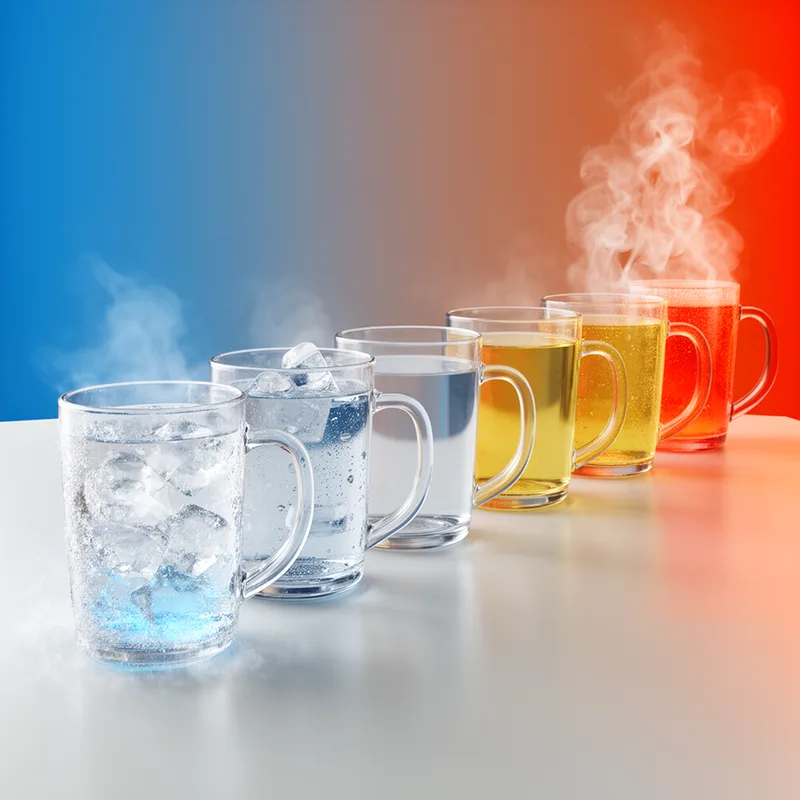
gradable opposition
- noun
- /ˈɡreɪdəbl əˈpɒzɪʃən/
- Specialized
- Hot and cold form a classic gradable opposition because many temperatures fall between them.
Examples
-
In linguistics, gradable opposition refers to pairs like 'tall' and 'short' which allow for comparison.
-
The words 'happy' and 'sad' illustrate a clear example of gradable opposition since many emotions can be placed on that spectrum.
-
The concept of gradable opposition helps explain how adjectives can be used in comparative ways.
-
The terms 'hot' and 'cold' are examples of gradable opposition.
-
Can you think of other examples of gradable oppositions?
-
In language studies, gradable opposition includes pairs like 'long' and 'short', where degrees of length can be compared.
-
When learning about gradable opposition, think of colors like 'light' and 'dark', which can be found in varying shades.
Synonyms

 5
7.0
5
7.0

Two opposite ideas or feelings, for example hope and despair
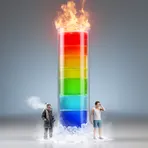
A clear contrast between two very different ends that shows points between them
Surface Forms
Morphology
The phrase is compositionally interpretable as an 'opposition that is gradable'—a relation built from the meanings of 'gradable' and 'opposition'—so a learner could infer it refers to opposites that vary by degree. However, this is a somewhat technical linguistic term and 'opposition' more commonly means 'resistance' or an opposing party for B1 learners, so the precise sense (a pair of antonyms on a scale) may not be fully predictable without prior exposure.
Etymology
The term gradable opposition names a pair of words, like hot and cold, that sit at opposite ends of a scale, like a thermometer with many degrees between them. That's why it means a pair of 'opposite ends of a scale' where things can be 'more' or 'less' and compared.