

goosander
- noun
- /ˈɡuːˌsændər/
- UK
- We watched a pair of goosanders dive beneath the surface of the lake for fish.
Examples
-
The male goosander has a striking white body and a dark green head.
-
I spotted a goosander swimming in the lake.
-
During winter, flocks of goosander can be seen on rivers across northern Europe.
-
Look at that goosander diving for fish!
-
During winter, flocks of goosander can be seen on rivers across northern Europe.
-
We watched a pair of goosanders dive beneath the surface of the lake for fish.
-
The male goosander has a striking white body and a dark green head.
Synonyms


 1
9.9
1
9.9
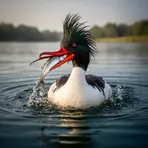
A large diving duck with a crest on its head and a narrow hooked bill that eats fish

A large duck that eats fish and lives by cold rivers in Europe and North America
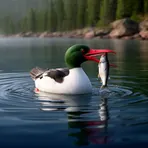
A North American diving duck with a long thin bill that catches fish

A large diving duck in North America that hunts fish in lakes and rivers

A large diving duck with a crest and a thin hooked bill for catching fish
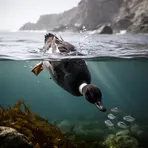
A large diving bird that lives by the sea and dives for food
Surface Forms
Morphology
Etymology
Goosander combines goose and an old part sander, a name once used for diving ducks, so it sounds like a goose-like bird that dives. So the name helps you remember it is a large, goose-like duck that 'dives' for fish.