
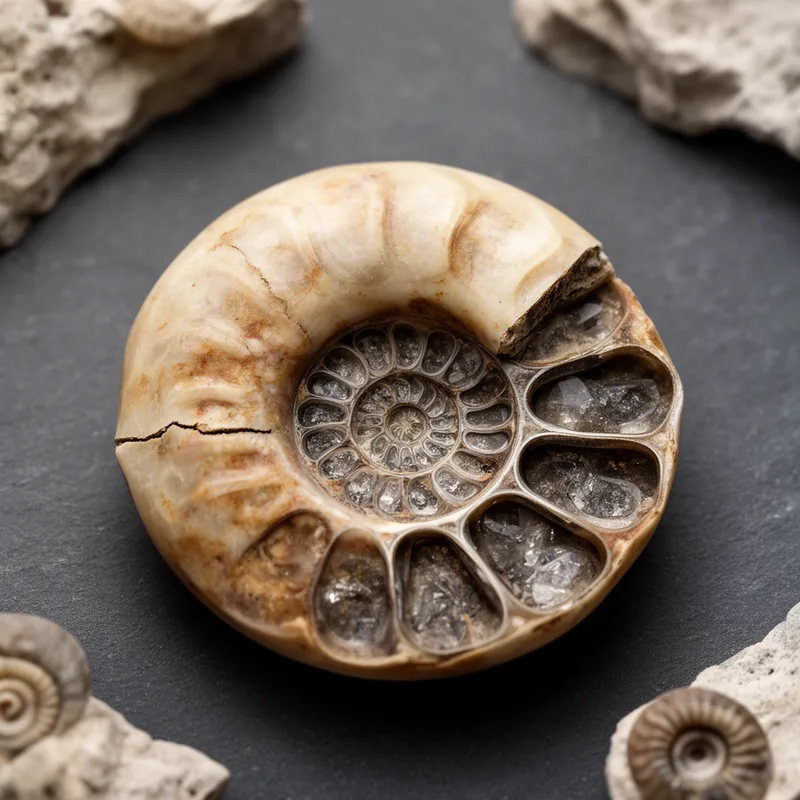
goniatite


 1
9.9
- noun
- /ˈɡoʊniəˌtaɪt/
- Specialized
- The fossil of a goniatite was discovered in the ancient rock formation.
Examples
-
Many collectors value goniatite fossils for their intricate shell patterns.
-
During the Devonian period, goniatites were common in ancient seas.
-
The paleontologist discovered a beautifully preserved goniatite in the limestone quarry.
-
Look at this beautiful goniatite shell I found!
-
Did you know that a goniatite is related to ammonites?
-
Scientists have learned much about the evolution of life through the study of goniatites found in sedimentary layers.
-
The intricate patterns on the shell of a goniatite provide insight into its living conditions in prehistoric oceans.
Synonyms
 1
8.6
A spiral fossil shell from an animal that lived long ago in the sea
 1
9.9
A fossil sea animal with a coiled shell divided into chambers
Surface Forms
Morphology
goniatite = goniat + ite
The element 'goniat-' is a specialized Greek combining form and '-ite' is a fossil/mineral naming suffix; neither is a productive, familiar English morpheme for learners, so the meaning cannot be derived from common English words.
Etymology
Goniatite comes from the Greek root goni- meaning 'angle' and the fossil ending -ite. The coiled shells of these extinct sea animals often show sharp, angled lines where the shell chambers meet, so the name points to those angled patterns on the fossil.