
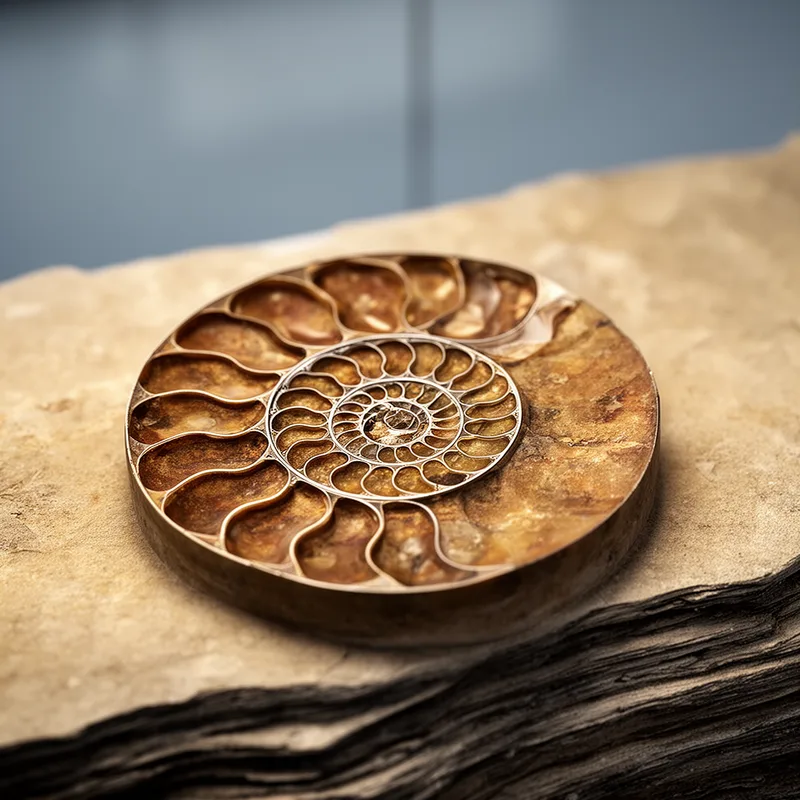
ammonoid


 1
9.9
- noun
- /ˈæməˌnɔɪd/
- Specialized
- The ammonoid fossils were discovered in the sediment layers.
Examples
-
Scientists study ammonoids to better understand the marine environments of ancient Earth.
-
Many geologists use the presence of ammonoids to help date the age of certain rock layers.
-
Scientists are fascinated by the complex suture patterns in ammonoid shells.
-
The museum's fossil exhibit features a remarkably well-preserved ammonoid shell dating back millions of years.
-
Many ammonoids lived during the Mesozoic era.
-
The museum exhibit featured various fossilized ammonoids, showcasing their unique chambered structures.
-
Eaton's house sits on the next layer, the Tropic Shale, which harbors ammonoids, sharks, rays, and other marine fossils.
Synonyms
 1
8.6
A spiral fossil shell from an animal that lived long ago in the sea
 1
8.6
A sea animal with a coiled shell that lived in ancient oceans
 1
9.9
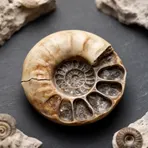
A fossil sea animal with a curled shell divided into chambers
Surface Forms
Morphology
ammonoid = Ammon (opaque) = ammon + oid
Although '-oid' means 'resembling', the zoological meaning is not recoverable for most learners from the proper name 'Ammon'.
Etymology
Ammonoid comes from the Egyptian god Amun because early writers thought the coiled shells looked like his ram's horns and called them 'horns of Ammon'. The ending -oid means 'like', as in asteroid, so ammonoid means 'like the horns of Ammon', which explains why the name fits these coiled fossil shells.