
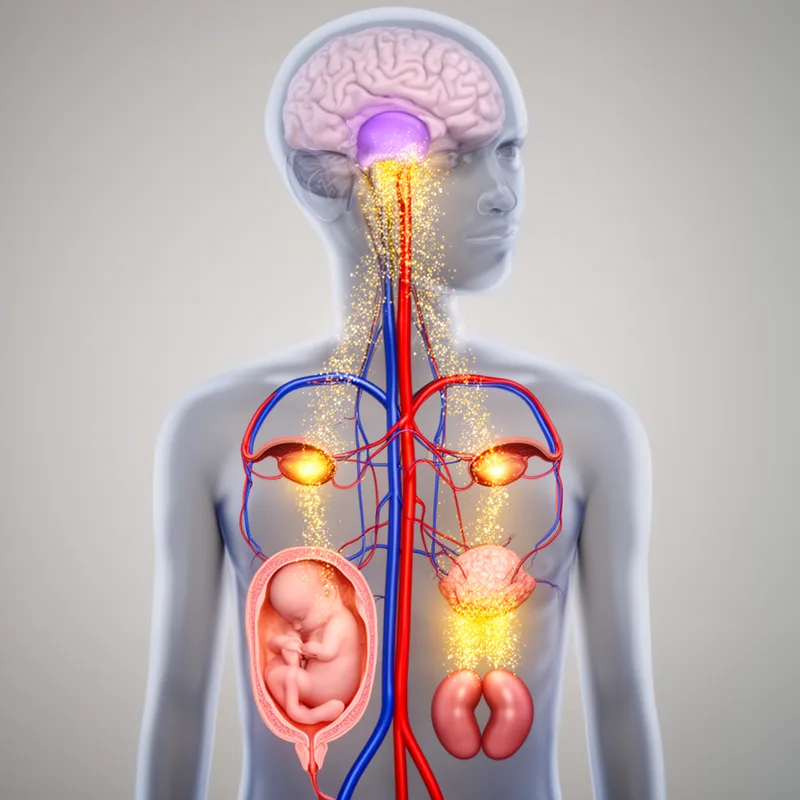
gonadotropic hormone
- noun
- /ˌɡoʊnəˈdrɒtɪpɪk ˈhɔːrmoʊn/
- Specialized
- Follicle-stimulating hormone and luteinizing hormone are both types of gonadotropic hormone involved in reproduction.
Examples
-
During pregnancy, the placenta produces a gonadotropic hormone called human chorionic gonadotropin.
-
The doctor explained that abnormal levels of gonadotropic hormone could impact fertility.
-
The gonadotropic hormone is essential for reproductive health.
-
Doctors often measure gonadotropic hormones in fertility tests.
-
During pregnancy, the placenta produces a gonadotropic hormone called human chorionic gonadotropin.
-
Follicle-stimulating hormone and luteinizing hormone are both types of gonadotropic hormone involved in reproduction.
-
The doctor explained that abnormal levels of gonadotropic hormone could impact fertility.
Synonyms
 1
9.4
1
9.4

A body chemical that makes the sex organs work and controls reproduction


 1
8.3
1
8.3
A hormone that makes the sex organs, like ovaries or testes, work and controls reproduction
Surface Forms
Morphology
The noun phrase is a straightforward adjective + noun composition: 'gonadotropic' means 'pertaining to hormones that affect the gonads/reproductive organs' and 'hormone' is a glandular chemical, so the combined meaning is literally 'a hormone that acts on the gonads'. This compositional pattern is standard and cross-linguistically common, so a learner who knows both constituents would be able to infer the MWE's meaning despite its technical register.
Etymology
Gonadotropic hormone comes from two parts that show its job: gonado- refers to the 'gonads', the reproductive organs, and -tropic means 'acting on' or 'turning to'. So a gonadotropic hormone is a hormone that 'acts on' the gonads to make them work, which is why the name now means hormones that control reproduction.