
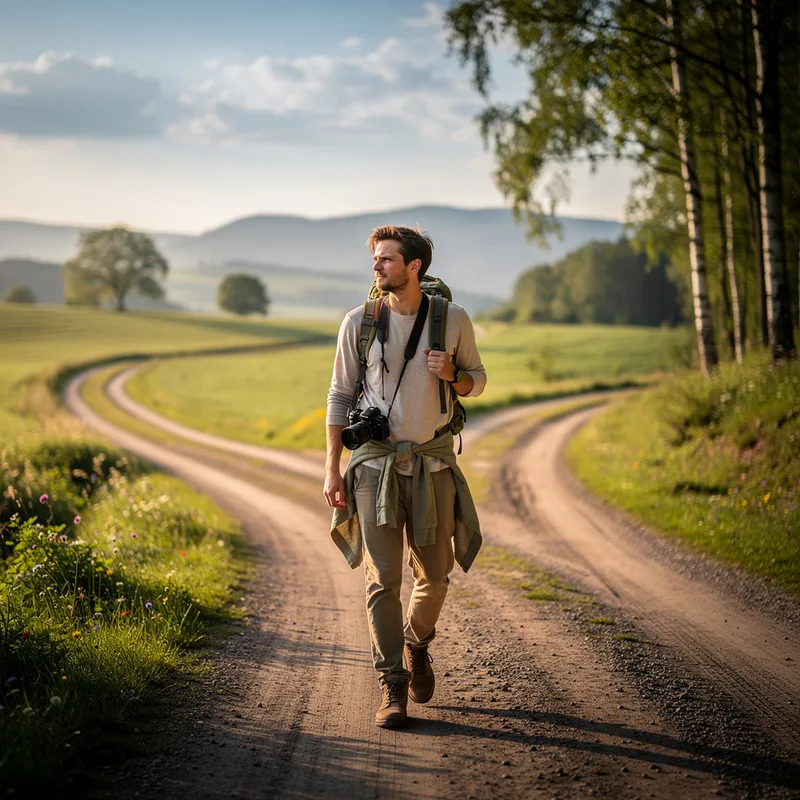
to go walkabout
 2
8.2
2
8.2

- phrasal verb
- UK
- He wants to go walkabout with King George.
Examples
-
King George tell me I gotta go walkabout.
-
If I a man, I gotta go walkabout.
-
Time to go walkabout, Mrs. Boss.
-
We can't help it if you go walkabout at night by yourselves.
-
'Cause I wouldn't stop Nullah from going walkabout.
-
He went walkabout. - You don't know?
-
He's not down at the billabong! - Then he's gone walkabout.
-
Cissy's gone walkabout!
-
He's gone walkabout!
-
After finishing her exams, she decided to go walkabout in the nearby forest to clear her mind.
Synonyms
 379
1.3
379
1.3
Move around without a fixed direction, often slowly and in curves
 214
1.7
214
1.7
To go on foot in a place without a clear purpose, often for pleasure
 189
2.5
189
2.5
Move around without a fixed place, often while looking for something
 12
4.1
12
4.1
To drive slowly around an area without a specific destination
 11
2.9
11
2.9
To walk around a town or city without a clear purpose
 8
3.1
8
3.1
To move around a place on your feet without a clear purpose
 8
7.6
8
7.6
To walk around without a clear plan, often slowly and without much energy
 4
6.9
4
6.9
To walk around without a clear purpose
 3
9.0
3
9.0
To move around places for pleasure without a plan
 3
6.8
3
6.8
To walk slowly through a place without a clear purpose
 2
3.7
2
3.7
To move around without fences or other limits
 2
4.1
2
4.1
Moving from place to place without a fixed home


 1
9.7
1
9.7
To walk around without a clear destination for pleasure

To go from place to place for fun without a plan
Antonyms


How Aimless

Surface Forms
Morphology
The verb 'go' (to move/travel) combined with the noun 'walkabout' (a journey or temporary wandering) yields a directly compositional meaning: to go on a walkabout, i.e. to travel or roam freely. While 'walkabout' is culturally specific to Australian usage, the construction 'go + noun' is a standard, cross-linguistically common pattern, so a B1 learner who knows both constituents should be able to infer the MWE meaning.
Etymology
Go walkabout comes from a traditional practice among Aboriginal Australians, where young men would leave home and spend a long time walking in the bush to connect with the land and learn about themselves. Because they walked without a set plan, go walkabout now means 'to travel or wander freely', often to clear your mind or 'find yourself'.