
glycolysis
 1
8.5

- noun
- /ɡlaɪˈkɒlɪsɪs/
- Specialized
- Reprogrammed metabolism, resulting in increased glucose uptake and glycolysis, is a hallmark of cancer.
- aerobic glycolysis
Loading YouTube…
Watch on YouTubeAnd so your, your, your muscle cells shift to using glucose as a source of energy through glycolysis.
- And so your, your, your muscle cells shift to using glucose as a source of energy through glycolysis.
- So he proposed that the, you know, cancer cells, mitochondria don't work, hence they have to undergo glycolysis, they can't undergo aerobic metabolism.
- And so you can have a few different ways to get to the Krebs cycle, either being through acetyl COA or through glucose going through the glycolysis to pyruvate.
Examples
-
During glycolysis, glucose is broken down into pyruvic acid, releasing energy in the form of ATP.
-
As the number of mitochondria drops and ATP demand from glycolysis goes up, what is the next limit that is reached?
Blog text (3) -
I also used it to understand chemical equations or to organize the stages of glycolysis in biology.
Blog text (1) -
If 5% of ATP demand is shifted from oxidative phosphorylation to glycolysis, glucose demand by that cell is doubled.
Blog text (3) -
In the mouse liver, genes involved in glycolysis, glucose synthesis, fatty acid metabolism, and cholesterol metabolism are expressed in daily rhythms.
Academic text (2005) -
Glycolysis is a crucial step in cellular respiration that generates energy for the cell.
-
In glycolysis, sugars undergo a series of metabolic reactions that ultimately produce lactic acid.
Surface Forms
Morphology
Etymology
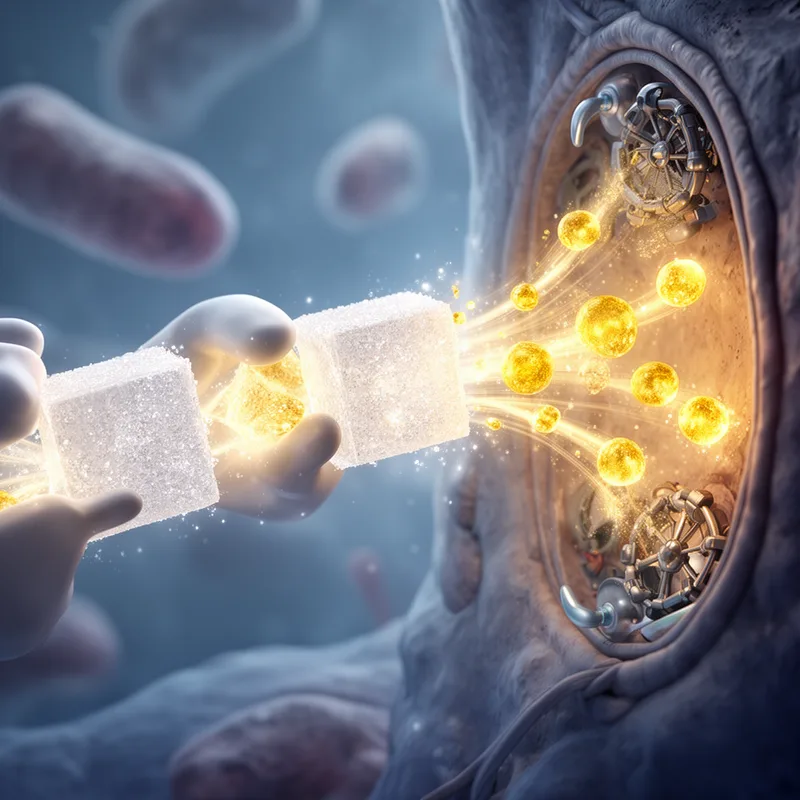
Glycolysis comes from Greek parts: glyco- meaning 'sweet' (seen in glucose) and -lysis meaning 'to break down' (seen in analysis). So glycolysis literally means 'breaking down sugar', which explains why it is the process cells use to break sugar into smaller parts to make energy.