
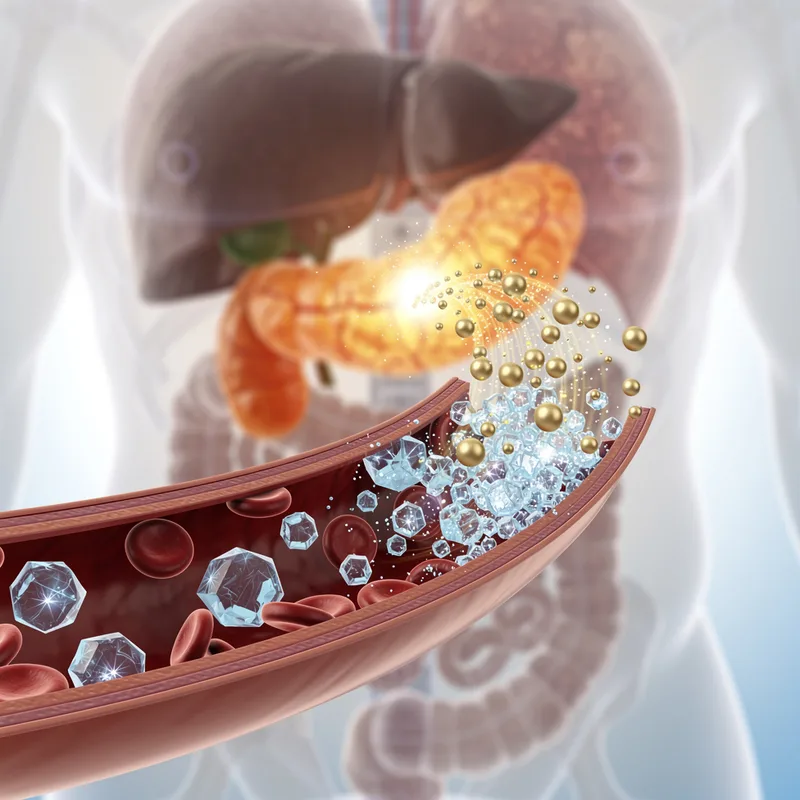
glucagon
 1
7.2

- noun
- /ˈɡluːkəˌɡɒn/
- Specialized
- Suppress pancreatic release of glucagon in response to eating, which helps stop the liver from overproducing glucose.
- glucagon injection
- glucagon receptor
- insulin and glucagon
Loading YouTube…
Watch on YouTubeHigh insulin prevents that from happening and Glucagon facilitates that process.
- High insulin prevents that from happening and Glucagon facilitates that process.
- So yerba mate, GLP, one can manage in healthy ways, leptin levels, glucose levels and Glucagon levels in ways that if it serves you, you might want to try.
Examples
-
In emergencies, patients may need to receive glucagon to quickly raise their blood sugar levels.
-
A glucagon injection will decrease high blood glucose in less than 10 minutes.
Academic text (2012) -
They'll give you a shot of glucagon.
-
Glucagon should be readily accessible, especially when there is a high risk of severe hypoglycemia.
Academic text (2012) -
Doctors often prescribe glucagon for diabetic patients who experience severe hypoglycemia.
-
If a diabetic patient becomes unconscious, administering glucagon can help restore their blood sugar levels.
Antonyms

Surface Forms
Morphology
Etymology
Glucagon comes from gluca- from 'glucose', meaning 'sugar', and -agon a Greek part meaning 'to act' or 'to drive'. So glucagon is the hormone that acts to raise or 'drive up' the level of sugar in the blood.