

glabrous
- adjective
- /ˈɡleɪbrəs/
- Specialized
- I felt, as I became a later and later bloomer, alienated not just from my own recalcitrant glabrous little body, but in a way from the whole elemental exterior I'd come to see as my coconspirator.
Loading YouTube…
Watch on YouTubeThat only takes place in the so-called glabrous skin of the of the palms, the face, and the bottoms of the feet.
- That only takes place in the so-called glabrous skin of the of the palms, the face, and the bottoms of the feet.
Examples
-
That the word "glabrous," which he has only seen used to describe a sort of luxurious quality in the human penis, offers a contrasting consistency of usage (I looked it up myself on getting home from the beach).
Fiction book (1990) -
That only takes place in the so-called glabrous skin of the of the palms, the face, and the bottoms of the feet.
-
He was stripped, cleansed, glabrous and smooth.
-
The leaves of the plant are glabrous and shiny, reflecting the sunlight beautifully.
-
She admired the glabrous skin of the sculpture, which had been polished to perfection.
-
The glabrous stems of the flowers stood out against the vibrant green foliage.
Synonyms
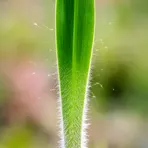
Becoming smooth and losing hair
Antonyms



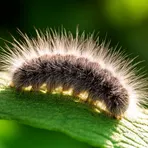
How Hairless

Surface Forms
Morphology
glabrous = glabr + ous
Although the adjective ends in the productive suffix '-ous', the lexical root 'glabr-' is not a recognizable English base for most learners, so the meaning 'smooth, hairless' is not transparently derived from familiar English components.
Etymology
Glabrous comes from the Latin word glaber, which meant 'bald' or 'smooth', like a hairless head. That's why glabrous describes a surface that is smooth and has no hair, such as skin, leaves, or a scalp.